
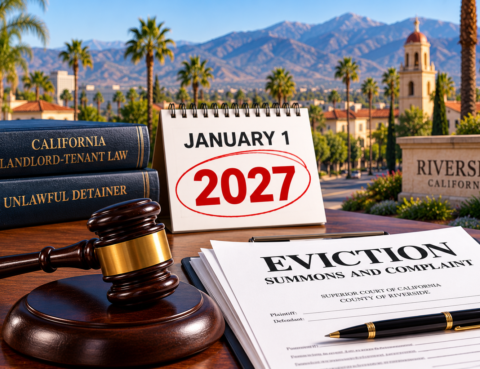
If you own rental property in Riverside County, there is an important change on the horizon that deserves your attention. Beginning January 1, 2027, new requirements involving the service of eviction documents are expected to place greater emphasis on how service attempts are made and documented
For landlords, this is more than a paperwork issue. An eviction can be delayed when a notice or court document is not served correctly. If a tenant challenges service, the records supporting your actions may become an important part of the case.
Whether you own a rental home in Riverside, manage apartments in Moreno Valley, or have investment property in Temecula, understanding the service process is essential to protecting your interests.
Why Service of Eviction Documents Matters
California’s eviction process, known as an unlawful detainer, has specific procedural requirements. A landlord generally cannot simply tell a tenant to leave, change the locks, or remove the tenant’s belongings. The legal process must be followed.
Service is one of the critical steps.
A landlord may have a legitimate reason to recover possession of a property. The tenant may be behind on rent, violating the rental agreement, or refusing to leave after a tenancy has legally ended. But even when the underlying reason for eviction is valid, errors in notices or service can create complications.
For example, imagine that a tenant in Corona has stopped paying rent. The landlord serves the required notice, the notice period expires, and an unlawful detainer lawsuit is filed. If the tenant later disputes whether the necessary documents were properly served, the court may need to consider that issue before the case can proceed.
The result can be additional work, added expense, and delays in recovering possession of the property.
What Is Changing in 2027?
Assembly Bills 747 and 2042 have been associated with changes to California’s procedures for serving eviction-related documents. The requirements applicable to a particular notice or court document matter, so landlords should not assume that every type of service follows an identical procedure.
The key takeaway for property owners is straightforward: service attempts and the records supporting them deserve careful attention.
Depending on the applicable requirements, the service process may involve documenting unsuccessful attempts, recording when and where attempts occurred, and retaining supporting evidence.
Landlords should confirm the specific requirements that apply to their circumstances before relying on a particular service method. A process that was sufficient in one situation should not automatically be assumed to satisfy the requirements in another.
When the Tenant Is Never Home
One of the most common practical challenges in an eviction is locating the tenant.
A tenant may leave early for work, return late at night, or simply refuse to answer the door. In apartment complexes and gated communities, access restrictions can create additional obstacles for a process server.
Consider a landlord in Murrieta whose tenant has stopped paying rent. The tenant does not answer the door during several visits, and the landlord is eager to move forward with an eviction.
Repeatedly visiting the property without keeping reliable records can create problems later. The landlord needs to know what attempts were made, when they occurred, and what happened during each visit.
Under applicable service requirements, the number, timing, and circumstances of attempts may matter. Landlords should not assume that a few unsuccessful visits automatically authorize an alternative method of service.
A qualified process server can help carry out the required steps and maintain appropriate documentation.
Why Documentation Is Becoming More Important
When service is questioned, a general statement that someone attempted delivery may not tell the whole story. Clear, contemporaneous records can help establish what occurred.
Depending on the applicable rules and circumstances, useful records may include:
- The date and time of each service attempt.
- The address where the attempt occurred.
- Notes describing the circumstances of the attempt.
- Information about whether the tenant or another person was present.
- Photographs, location information, or other supporting evidence when appropriate and permitted.
- The completed proof or declaration of service.
- Records showing how any additional required service steps were completed.
The purpose is to create a reliable account of the service process rather than reconstructing events after a dispute arises.
Landlords should also make sure that their property managers, attorneys, and process servers understand who is responsible for maintaining these records. Important information can be difficult to obtain later if each person assumes someone else has retained it.
Do Not Overlook the Initial Eviction Notice
Service concerns do not begin only when the unlawful detainer lawsuit is filed. The notice that precedes the lawsuit is also an important part of the eviction process.
Depending on the circumstances, a landlord may need to serve a notice relating to unpaid rent, a lease violation, or the termination of a tenancy. The correct notice and the method of service depend on the situation and applicable law.
Keep a complete copy of the notice and the records associated with its service. If the tenant disputes the notice or the service method, those materials may become important.
A landlord should not assume that proper service of the lawsuit will cure a problem with an earlier notice. Each required step must be evaluated on its own merits.
What Happens When a Tenant Challenges Service?
A tenant may dispute whether an eviction notice or court papers were served correctly. If that happens, the court may need to consider the service issue before the case can move forward.
The consequences depend on the facts, the documents involved, and the applicable law. A service dispute can create additional court proceedings, delay a decision, or require corrective action.
For landlords, the practical lesson is to address service requirements before a dispute develops. Accurate records and a clear understanding of the applicable procedure can help the case proceed with fewer avoidable complications.
If you believe a tenant is likely to challenge service, consult an eviction attorney about the appropriate steps for your particular case.
What Riverside County Landlords Should Do Now
January 1, 2027, provides a useful deadline for reviewing your current eviction procedures. Property owners do not need to wait until a tenant disputes service to examine how notices and court documents are handled.
Consider taking the following steps:
1. Review your current procedures. Make sure you understand the requirements for serving eviction notices and court papers in the situations you commonly encounter.
2. Coordinate with your process server. Ask how service attempts are recorded and what documentation will be provided. Confirm that the process server understands the requirements applicable to the documents being served.
3. Keep complete records. Maintain copies of notices, proofs of service, communications, and supporting documentation in an organized file for each tenancy.
4. Communicate with your property manager. If a manager handles the property, clarify who retains service records and how those records will be provided if the case is challenged.
5. Obtain legal guidance before proceeding when uncertain. Service requirements can depend on the type of document and the circumstances. Confirm the applicable procedure rather than relying on assumptions or a method used in a previous case.
These steps can help you identify potential problems earlier and reduce the risk of avoidable procedural delays.
Protect Your Investment With the Right Eviction Process
For Riverside County landlords, the goal is not simply to start an eviction. It is to follow the required process correctly, establish the necessary facts, and pursue possession of the property through the appropriate legal channels.
Changes to service procedures make it especially important to pay attention to the details. A tenant’s failure to pay rent or comply with a lease does not eliminate the landlord’s obligation to follow applicable eviction laws.
At Riverside Evictions, our practice focuses on representing property owners in residential and commercial unlawful detainer matters. We assist landlords throughout Riverside County, including Riverside, Corona, Moreno Valley, Temecula, Murrieta, Menifee, Perris, and surrounding communities.
If you are preparing to evict a tenant, have questions about service requirements, or want to review your current procedures before the 2027 changes take effect, our office can help you understand the next steps.
Call Riverside Evictions at 844-EZ-EVICT (844-393-8428) or email info@riversideevictions.com to discuss your situation.
This article is intended for general informational purposes only and is not legal advice. Eviction and service requirements depend on the facts of each case and the law applicable at the time. Consult a qualified attorney about your specific circumstances.

You rent your property to one person after carefully screening the applicant, checking their credit, verifying their income, and contacting their previous landlord.
Then you discover that someone else has moved in.
Maybe it’s a friend or family member your tenant never mentioned. Maybe the tenant has quietly sublet the property. Maybe a guest who was supposed to stay for a few days has been there for months. Or perhaps someone has moved into a vacant property without permission and now insists they have a right to remain.
For Riverside County landlords, these situations can create a difficult question:
How do you get someone out of your rental property when they aren’t supposed to be there?
The answer isn’t always as simple as telling the person to leave.
One of the biggest mistakes a landlord can make is assuming that an unauthorized occupant can simply be removed by changing the locks, shutting off the utilities, or putting their belongings outside.
California’s eviction laws generally require landlords to follow a specific legal process when an occupant has a potential right to possession. Depending on the circumstances, that process can involve a notice, an unlawful detainer lawsuit, a court judgment, and ultimately enforcement by the Sheriff.
The first step is determining exactly what kind of occupant you’re dealing with.
Who Is Living in Your Rental Property?
Not everyone who isn’t listed on a lease is legally considered a squatter.
An unauthorized roommate, a subtenant, a long-term guest, a former tenant, and someone who entered a vacant property without permission can all present very different legal issues.
Understanding how the person came to occupy the property is critical because it can determine what notice is required and how the eviction should proceed.
Unauthorized Roommates and Subtenants
One of the most common scenarios is discovering that your tenant has allowed another person to move into the rental.
Perhaps the tenant’s partner moved in. Maybe a friend is paying part of the rent. Or the tenant may have effectively sublet the entire property to someone else.
If the lease prohibits additional occupants or subletting without the landlord’s approval, this may constitute a violation of the rental agreement.
However, the person living in the property may still have entered with permission from someone who had lawful possession.
That makes this situation different from a stranger who breaks into an empty house.
How should a Riverside landlord handle an unauthorized roommate?
The starting point is usually the lease.
Look at the provisions dealing with:
- Occupancy
- Subletting
- Assignment
- Guests
- Additional residents
- Landlord approval
If the tenant has violated one of those provisions, a 3-Day Notice to Perform Covenant or Quit may be appropriate when the violation can legally be cured.
The notice should clearly identify the lease requirement that was violated and explain what the tenant must do to correct the problem.
If the unauthorized person leaves and the tenant is otherwise in compliance, the issue may be resolved without an eviction lawsuit.
But if the tenant does not correct the violation, the landlord may have grounds to proceed with an unlawful detainer.
Don’t assume every subtenant requires the same notice
California eviction law is highly dependent on the facts.
The type of tenancy, the lease language, whether the tenant has an applicable just-cause protection, and the nature of the unauthorized occupancy can all affect the proper procedure.
A notice that works in one situation may be defective in another.
That’s why it is important to determine the occupant’s status before serving the notice.
When a Guest Refuses to Leave
Another problem occurs when someone who originally had permission to be at the property simply doesn’t leave.
Maybe your tenant allowed a friend to stay for a few weeks.
Maybe a family member moved in temporarily.
Maybe the property is being used as a short-term rental and the guest refuses to check out when the reservation ends.
The longer someone remains, the more important it becomes to determine whether the person is still a guest or has developed rights associated with a tenancy.
Does 30 Days Make Someone a Tenant?
You’ll often hear landlords say that “30 days makes someone a tenant.”
The reality is more complicated.
California law contains specific rules concerning transient occupancy, including exceptions involving hotels, motels, and similar lodging. A stay of 30 days or more can be an important factor when determining whether an occupant should be treated as a residential tenant rather than a transient guest.
But there is no universal rule that every person automatically becomes a tenant at midnight on the 30th day.
The details matter.
The original agreement, the type of property, payments, the parties’ conduct, and other circumstances can affect the legal relationship.
A short-term guest isn’t necessarily easy to remove
If someone’s authorized stay has ended and they have no legal right to remain, the owner may have remedies other than a traditional residential eviction.
But landlords should be cautious about assuming that the police will simply remove the person.
If the occupant claims to be a tenant or produces something suggesting they were given permission to live there, law enforcement may consider it a civil dispute.
At that point, the owner may need to pursue the appropriate court process.
What about a guest who has been there for months?
The longer the person remains, the greater the risk that they may assert tenant rights.
If the facts indicate that a landlord-tenant relationship exists, the owner may need to comply with California’s termination and eviction requirements.
Do not change the locks simply because the original arrangement was supposed to be temporary.
What About Squatters in Riverside County?
Squatters are a different category.
A true squatter generally has no lease, no permission from the owner, and no connection to a tenant who had lawful possession.
Someone may enter a vacant rental property, move into a house between tenants, or occupy a property that has been sitting empty.
The owner may immediately think:
They broke in. They’re trespassing. Why can’t the police just remove them?
Sometimes they can.
But not every squatter situation is that straightforward.
When a Squatter Claims to Have a Lease
One of the biggest complications occurs when an occupant produces something that appears to establish a right to live in the property.
For example, they might show:
- A purported rental agreement
- Mail delivered to the address
- A utility account
- A receipt for a rent payment
- A text message allegedly giving them permission
- Other documents they claim prove they were authorized to occupy the property
Whether those documents are legitimate is a different question.
Law enforcement may not be willing to determine that question at the property.
If officers cannot establish that the person is clearly trespassing, they may direct the property owner toward the civil court process instead.
That is why a situation that appears to be a simple squatter problem can turn into an unlawful detainer case.
How Do You Get a Squatter Out of a Riverside Property?
When an unauthorized occupant has taken possession and refuses to leave, an unlawful detainer may be necessary.
An unlawful detainer is the California court process used to determine the right to possession and, when the property owner prevails, allow possession to be recovered through the legal eviction process.
The appropriate legal theory depends on how the occupant entered the property and what facts can be established.
The important thing for a landlord is to avoid treating every unauthorized occupant as though they are legally identical.
What If You Don’t Know the Occupant’s Name?
This is an issue landlords sometimes discover too late.
You may know your tenant’s identity, but you may not know who else is living in the property.
Perhaps there are several people inside who were never listed on the lease.
What happens when you win the eviction against the named tenant but one of those unidentified occupants claims they were never part of the lawsuit?
California has a procedure specifically addressing unnamed occupants in unlawful detainer cases.
Prejudgment Claim of Right to Possession
The Prejudgment Claim of Right to Possession, commonly associated with Form CP10.5, can be an important tool when a landlord does not know the names of everyone occupying the property.
When properly used, the procedure gives unnamed occupants an opportunity to assert a claim to possession during the case rather than waiting until the Sheriff arrives to enforce the judgment.
This is especially important in cases involving:
- Unauthorized roommates
- Subtenants
- Unknown occupants
- Former tenants’ family members
- Squatters
- Other adults whose identities are unknown
If you believe there are unidentified occupants at the property, discuss the appropriate use and service of the prejudgment claim with your eviction attorney or professional before filing the case.
Don’t Accidentally Turn an Unauthorized Occupant Into Your Tenant
Sometimes the landlord’s own actions make the situation more complicated.
Consider this example:
Your tenant has moved out.
Their roommate remains behind.
A few days later, the roommate sends you the monthly rent through Zelle.
You deposit it because you don’t want to lose the money.
Now you may have created an argument that the roommate has a direct landlord-tenant relationship with you.
Accepting money from an occupant can be evidence that you recognized the person’s right to occupy the property, depending on the circumstances.
That can change the legal analysis entirely.
Other Actions That Can Create Problems
Landlords should also be careful about:
- Accepting a security deposit from an unauthorized occupant
- Signing an agreement with the person
- Giving written permission for them to stay
- Providing keys directly to them
- Adding them to utilities
- Giving them parking or building access as an approved resident
- Allowing them to remain indefinitely while you decide what to do
If an unauthorized occupant offers to pay you rent, stop before accepting the money and determine the legal consequences first.
A payment that looks harmless could complicate an eviction that otherwise might have been straightforward.
What Should a Riverside Landlord Do After Discovering an Unauthorized Occupant?
Once you discover someone living in your rental who isn’t supposed to be there, resist the temptation to act immediately.
A few careful steps can prevent a much larger problem later.
1. Establish the Facts
Start by documenting what you know.
That doesn’t mean entering the property without authorization or searching through someone’s belongings.
California law limits when and why a landlord may enter a rental property.
Instead, document information you can lawfully obtain, such as:
- Vehicles regularly parked at the property
- Information provided by the tenant
- Written communications
- Statements from neighbors
- Information from a property manager
- Information from contractors or vendors who were lawfully present
- Public social-media posts
- Exterior security-camera footage
- Observations made during a lawful inspection
Keep dates and details.
A clear timeline can become valuable evidence if the dispute eventually reaches court.
2. Determine Which Notice Applies
Once you understand the situation, determine what legal notice—if any—is required.
Depending on the circumstances, that could include:
- 3-Day Notice to Pay Rent or Quit
- 3-Day Notice to Perform Covenant or Quit
- 3-Day Notice to Quit
- 30-Day Notice
- 60-Day Notice
- Another notice required by California law
The fact that someone isn’t listed on the lease does not by itself determine which notice should be served.
The reason for the termination and the legal status of the occupant matter.
Notice errors can derail an eviction
Eviction cases are procedural.
If the notice is defective, the landlord may have to start over even if the underlying complaint against the tenant is legitimate.
That means the notice should be carefully prepared and served according to California law.
Keep the original notice, a copy, and proof of service.
3. File an Unlawful Detainer When Necessary
If the occupant or tenant does not comply with the applicable notice, the next step may be an unlawful detainer lawsuit.
The process generally involves:
- Filing the appropriate complaint.
- Serving the summons and complaint.
- Addressing unnamed occupants when appropriate.
- Allowing the defendant the required time to respond.
- Proceeding toward default or trial, depending on the response.
- Obtaining a judgment for possession if the landlord prevails.
- Obtaining the writ of possession.
- Turning the writ over to the Sheriff for enforcement.
The Sheriff—not the landlord—is responsible for physically enforcing the eviction.
The amount of time involved varies significantly depending on whether the tenant contests the case, files motions, requests a jury, or otherwise challenges the eviction.
An uncontested case may move much faster than a heavily contested one.
When Should You Call a Riverside Eviction Professional?
An unauthorized occupant can create a surprisingly complicated eviction.
The person could be a roommate, subtenant, guest, former tenant, family member, or true trespasser.
And the landlord’s first assumption isn’t always legally correct.
The biggest problems often arise when a landlord:
- Uses the wrong notice
- Assumes a squatter can always be removed by police
- Accepts rent from an unauthorized occupant
- Fails to account for unknown occupants
- Enters the property improperly
- Changes the locks
- Shuts off utilities
- Attempts to remove belongings without following the legal process
If you own rental property in Riverside County and discover an unauthorized occupant, getting the process right from the beginning can save considerable time, expense, and frustration.
Riverside Evictions helps landlords navigate California’s eviction process, including situations involving unauthorized occupants, roommates, subtenants, guests, and squatters.
If you’re dealing with someone who is living in your property without authorization, contact Riverside Evictions to discuss your situation and determine the appropriate next step.
This article is provided for general informational purposes and does not constitute legal advice. California landlord-tenant law changes frequently, and the appropriate procedure depends on the facts of each situation. Consult a licensed California attorney before taking action to remove an occupant.

Riverside County’s maximum allowable rent increase rises to 8.1% for any increase taking effect between August 1, 2026 and July 31, 2027.
That is up from 7.5%. If you own residential rental property in Riverside County — or in San Bernardino County, which shares the same index — this is the number that governs every rent increase you serve for the next twelve months, unless your property is exempt or sits under a local ordinance.
One warning before the details: Riverside’s figure is the one most often reported wrong. Nearly every statewide “California rent cap” roundup either omits Riverside or quietly substitutes Los Angeles’s number. If you have been working from a general California guide rather than a Riverside-specific source, there is a real chance you have been using the wrong cap.
The Short Answer
| Maximum allowable increase | 8.1% |
| Applies to effective dates | August 1, 2026 – July 31, 2027 |
| Formula | 5% base + 3.1% Riverside–San Bernardino–Ontario CPI |
| Prior year cap | 7.5% (5% + 2.5% CPI) |
| Statutory authority | Cal. Civil Code § 1947.12 (AB 1482) |
| Hard ceiling | 10%, regardless of CPI |
| Counties covered | Riverside and San Bernardino |
The cap applies per 12-month period, not per increase. You may raise rent twice within a 12-month window, but the combined increase cannot exceed 8.1%.
Why Riverside Is Its Own Number
California’s Tenant Protection Act sets the maximum annual rent increase at 5% plus the year-over-year change in the regional Consumer Price Index, never exceeding 10%. The 5% base is fixed by statute. The CPI input resets every August 1.
Riverside County falls within the Riverside–San Bernardino–Ontario CPI region. Two things about that region matter:
It is measured in March, not April. The statute’s default is the April-to-April change, but the Bureau of Labor Statistics does not publish an April figure for the Riverside–San Bernardino–Ontario area. Where no April number exists, § 1947.12 permits use of the March figure instead. Riverside and San Diego are the two California regions that work this way; Los Angeles and Orange County use April.
It is not a variant of Los Angeles. The Inland Empire index moves independently, and this year it diverged sharply. The March-to-March change came in at 3.1%.
5% + 3.1% = 8.1%.
Riverside vs. Other Southern California Regions
| Region | Cap, 8/1/2026 – 7/31/2027 |
| Riverside & San Bernardino | 8.1% |
| San Diego County | 8.2% |
| Orange & Los Angeles Counties | 8.7% |
| Core Bay Area counties | 8.8% |
| Remainder of California | 8.6% |
Riverside currently has the lowest AB 1482 cap in Southern California. If you own across county lines, you cannot apply one number portfolio-wide — a landlord using the Los Angeles figure on a Riverside property is over-cap by 0.6 points.
The Date That Matters Is the Effective Date — Not the Notice Date
The applicable cap is determined by the date the increase takes effect, not the date the notice was served.
An increase taking effect on or after August 1, 2026 may use 8.1%, even if the notice went out in July. But an increase taking effect on or before July 31, 2026 is still limited to 7.5%, no matter when you drafted the notice or that the higher figure had already been published.
The trap runs in a specific direction when the cap rises. The 8.1% number became public in May, well before it became operative. A notice served in June 2026 for a July 1 effective date that used 8.1% was an over-cap demand — the ceiling that month was 7.5%.
If you have notices in flight, match each one to its effective date, not to today’s number.
Running the Math
Multiply current rent by 1.081 to find the maximum lawful new rent.
| Current Monthly Rent | Maximum Increase | Maximum New Rent |
| $1,600 | $129.60 | $1,729.60 |
| $1,900 | $153.90 | $2,053.90 |
| $2,200 | $178.20 | $2,378.20 |
| $2,500 | $202.50 | $2,702.50 |
| $2,900 | $234.90 | $3,134.90 |
| $3,400 | $275.40 | $3,675.40 |
Two practical cautions:
Round down, not up. Rounding a $2,378.20 ceiling to $2,380 is a $1.80 over-cap demand. Trivial in dollars — but the statute contains no de minimis exception, and liability attaches to the demand.
Count increases already taken in the last 12 months. If you raised rent 4% in February 2026, you have 4.1% of headroom left in that window, not a fresh 8.1%.
Is Your Property Even Covered?
The 8.1% cap applies only to covered units. Several categories are exempt:
- New construction. Housing issued a certificate of occupancy within the previous 15 years. This is a rolling exemption — as of 2026 it reaches buildings completed in 2011 or later, and it moves forward every year. A building exempt three years ago may be covered today. Re-verify annually.
- Single-family homes and condominiums, but only if (1) the property is not owned by a corporation, a REIT, or an LLC with at least one corporate member, and (2) the tenant received the statutorily required written exemption notice. Without the notice, the exemption does not apply regardless of ownership structure.
- Owner-occupied duplexes, where the owner has occupied one unit as their principal residence since the tenancy began.
- Deed-restricted affordable housing, dormitories, and certain owner-occupied share arrangements.
The single-family exemption deserves particular attention in the Inland Empire, where single-family rentals make up a larger share of the market than in coastal counties. The required notice language must be delivered properly, and for tenancies entered into or renewed after July 1, 2020 it generally must appear in the lease itself. Corporate and LLC ownership is common in this market, and an LLC with a corporate member does not qualify. Owners who assume the exemption applies without confirming both the ownership structure and the notice are the ones who end up litigating it.
Exempt Does Not Always Mean Uncapped
One caveat worth knowing. During a declared state of emergency, Penal Code § 396 makes it unlawful to increase rental prices by more than 10% — and that applies to exempt properties, which otherwise have no ceiling at all. The housing provision runs for 30 days following a proclamation unless extended.
Riverside County is not currently listed among the jurisdictions under active price gouging protections, but this county sees wildfire and storm declarations regularly, and the protections attach immediately on proclamation. If you are raising rent on an exempt property by more than 10%, confirm there is no active declaration before you serve. The Governor’s Office of Emergency Services maintains the current list.
Local Ordinances: What Riverside County Does and Does Not Have
Here the Inland Empire picture differs sharply from coastal Southern California, and the distinction is worth stating plainly.
No city or unincorporated area in Riverside County has general rent control for conventional apartments in the way Santa Ana or Los Angeles does. For most Riverside County rental housing, AB 1482 is the whole of the rent cap analysis.
But three categories of local regulation do exist, and two of them catch landlords out.
Mobilehome park rent stabilization is widespread
Riverside County has one of the largest concentrations of mobilehome park rent stabilization in California. If you own or operate park spaces, AB 1482 is not your governing law.
- Unincorporated Riverside County — Ordinance No. 760, effective March 20, 1996, administered by the County. Park owners are entitled to an annual increase equal to 100% of the applicable CPI in effect at the time of the notice. Annual increases do not require an application to the County, but registration obligations apply.
- City of Riverside — Riverside Municipal Code Chapter 5.75, applying to all mobilehome parks within city limits. For space rents not governed by a lease with a term greater than one year, annual increases may not exceed 80% of the CPI for the prior 12-month period ending August 31. The operative CPI figure is formally adopted by the City Council each September under RMC § 5.75.040 — so the number changes on a September cycle, not August, and you need the Council-adopted figure rather than the raw BLS number.
- Palm Desert — mobilehome space rent stabilization limiting increases to 75% of CPI.
- Other cities. A number of additional Riverside County cities have adopted mobilehome park ordinances over the years. Coverage and formulas vary, and ordinances are amended. Verify the specific city before serving notice on a park space; do not assume the county ordinance applies inside city limits, or that a neighboring city’s formula carries over.
Palm Springs has actual residential rent control
Palm Springs is the exception to the “no general rent control” rule, and it is the most consequential local ordinance in the county.
The Palm Springs rent control ordinance began as a 1980 voter initiative and has been amended by initiative three times since. Its current features include:
- Rent increases limited to 75% of the CPI increase
- One increase per year maximum
- Coverage extending to mobilehome spaces and certain older residential units
- Mandatory annual registration and fees, with rent increases prohibited while a property is unregistered
- Enhanced tenant damages where a property is in violation
- Waivers of tenant rights under the ordinance are invalid
- A hardship petition process before the Rent Review Commission for owners seeking a fair return
- Vacancy decontrol on covered units except mobilehome park spaces
Two points deserve emphasis. First, as with Santa Ana’s ordinance, an increase can fail for reasons unrelated to the percentage — an unregistered property cannot lawfully raise rent even at a correctly calculated figure.
Second, and directly relevant if you are heading toward an unlawful detainer: for a covered residential unit, the Palm Springs municipal code requires the landlord to allege substantial compliance with the ordinance in the complaint for possession. That is a pleading requirement, not merely a substantive one. A complaint that omits the allegation is vulnerable regardless of the merits of the underlying default.
Just cause ordinances are starting to appear
Riverside County cities have historically not layered local just cause requirements on top of AB 1482, but that is beginning to change. The City of Perris is reported to have adopted an ordinance in January 2026 addressing just cause eviction protections beyond state law.
We flag this rather than summarize it, because local ordinances of this kind are frequently amended between adoption and codification. If your property is in Perris — or in any Riverside County city where you have not checked in the last twelve months — confirm the current codified text and operative date before serving any notice. This is the fastest-moving part of the analysis.
Notice Requirements
The rent cap and the notice statute are separate obligations. Civil Code § 827 requires:
- At least 30 days’ written notice where the increase, combined with any other increases in the prior 12 months, totals 10% or less.
- At least 90 days’ written notice where the increase exceeds 10%.
Because the statewide cap can never exceed 10%, covered units will effectively always fall in the 30-day category. Exempt properties can lawfully exceed 10% — and those increases require 90 days.
Local ordinances may impose additional notice content requirements. Notice must be served in a legally sufficient manner; add five days if serving by mail.
Were Your Past Increases Lawful? Prior-Year Caps and Why They Still Matter
The cap resets every August 1, and each increase is measured against the cap in force on its effective date. An increase served in 2023 is judged by the 2023–2024 number, not today’s.
Riverside’s series has been unusually volatile, which makes this table more important here than in neighboring counties:
| Effective Dates | Riverside & San Bernardino Cap | CPI Input |
| August 1, 2022 – July 31, 2023 | 10% | ceiling applied |
| August 1, 2023 – July 31, 2024 | 8.9% | 3.9% |
| August 1, 2024 – July 31, 2025 | 9.3% | 4.3% |
| August 1, 2025 – July 31, 2026 | 7.5% | 2.5% |
| August 1, 2026 – July 31, 2027 | 8.1% | 3.1% |
Note the 2024–25 to 2025–26 transition: the cap fell 1.8 points in a single year, from 9.3% to 7.5%. That is the sharpest single-year drop in any Southern California region during this period. A landlord who took 9.3% in the 2024–25 window and assumed a similar figure remained available the following year over-increased by nearly two points.
The 10% figure in 2022–2023 reflects the statutory ceiling rather than the formula. Inflation ran high enough that 5% + CPI exceeded 10% across every California region that year, so the hard cap governed everywhere. A landlord who took 10% then was within the law; one who assumed 10% remained available in 2023–2024 was not, because the cap that year was 8.9%.
These are Riverside–San Bernardino figures and they are not interchangeable. In the 2025–26 window, Riverside was 7.5%, Los Angeles and Orange County were 8.0%, and San Diego was 8.8%. A landlord who audited a Riverside rent history against a general California table showing 8.0% or 8.8% would conclude an unlawful increase was lawful.
This table begins with the 2022–23 window. Because rent cap claims are generally subject to a three-year limitations period, earlier increases are usually outside the window of live exposure. If you have a specific concern about an increase predating August 2022, that needs individual review rather than a table.
Mobilehome park spaces and Palm Springs properties require a separate audit against the applicable local schedule, which runs on a different calendar and a different formula.
Why an Old Over-Cap Increase Is Not a Closed Issue
Three consequences follow from an unlawful past increase, and the second and third are the ones that surprise people.
1. Direct exposure for the overage. The tenant may have a claim for the amount collected above the lawful maximum, discussed in the next section.
2. It corrupts the base rent going forward. Civil Code § 1947.12 measures the allowable increase against the lowest gross rental rate charged during the preceding 12 months. If a prior increase was unlawful, the argument follows that the lawful base was never the inflated figure — and every increase stacked on top of it compounds the original error. A single bad increase in 2023 can make subsequent, individually reasonable-looking increases unlawful too. Compounding runs in the wrong direction here.
3. It can defeat an unlawful detainer. This is the practical risk that matters most. A three-day notice to pay rent or quit must state the amount of rent actually due. If the rent demanded includes an unlawful overage — even a small one — the notice overstates what is owed and is subject to challenge as defective. Landlords have lost otherwise-strong nonpayment cases on exactly this point, then started over with a corrected notice while arrears kept accruing.
Given how often Riverside’s cap is misreported, this is a live risk in this county specifically. If you are preparing to serve a notice on a long-term tenant, audit the rent history first. Discovering a 2024 miscalculation in your own files is inconvenient. Discovering it in a tenant’s answer is expensive.
How Far Back Does Liability Reach?
For rent cap claims, a tenant generally has three years from the date the cause of action accrued. Because liability can attach each time an over-cap payment is demanded or accepted, the practical reach can extend to the earliest over-cap payment still inside that window rather than to the date the increase was first served.
A further wrinkle: the enhanced remedies described below arrived with SB 567 and took effect April 1, 2024. Increases predating that date are governed by the prior framework, under which the primary consequence was that the excess was simply not owed. Whether and how the newer remedies apply to conduct that began before April 2024 but continued after it is a fact-specific question, and one worth asking a lawyer before you decide an old increase is safely behind you.
Running a Rent History Audit
For each unit with a tenancy predating August 2025:
- Determine which scheme applies — AB 1482, a mobilehome park ordinance, or the Palm Springs ordinance — for each year of the tenancy.
- Pull every rent increase notice served during the tenancy, with its effective date.
- Match each one to the Riverside cap in force on that effective date using the table above — not the cap in force when the notice was drafted, and not a statewide or Los Angeles figure.
- Confirm the unit was covered in each of those years. The 15-year new-construction exemption rolls forward annually.
- Check for stacking. Two increases inside one 12-month window must total no more than that window’s cap. Local ordinances typically permit only one.
- For park spaces and Palm Springs units, verify registration and compliance status for each year an increase was taken.
- Recalculate the lawful base rent forward from the first defective increase, if you find one.
- Decide on remediation before you serve anything new.
Self-correcting is almost always cheaper than being corrected. It also removes the defect from any notice you serve afterward.
What Non-Compliance Costs
Since SB 567 took effect in April 2024, the penalties for exceeding the cap are considerably sharper than they used to be.
An owner who demands, accepts, receives, or retains rent above the maximum allowable amount may be liable to the tenant for:
- Injunctive relief
- Damages equal to the amount by which the payment exceeded the lawful maximum
- Reasonable attorney’s fees and costs, at the court’s discretion
- Up to three times the excess amount, on a showing that the owner acted willfully or with oppression, fraud, or malice
The Attorney General, and the city attorney or county counsel where the unit is located, may also enforce the rent cap provisions and seek injunctive relief. Tenants have up to three years to bring a claim.
Note the structure carefully: liability attaches to demanding an over-cap rent, not only to collecting one. A defective notice can create exposure before a single dollar changes hands.
A point of some comfort for owners who got the number wrong in good faith: the treble damages provision requires a showing of willfulness, oppression, fraud, or malice. An honest miscalculation is not that. But the base damages, the attorney’s fees exposure, and the effect on any pending unlawful detainer do not depend on intent at all.
Compliance Checklist for August 1
- Confirm you are using the Riverside figure. 8.1% — not Los Angeles’s 8.7%, not San Diego’s 8.2%, not a statewide number.
- Determine which scheme governs. Mobilehome park space? Palm Springs? A city with a recent ordinance? Those override the state cap.
- Confirm coverage. Is the unit exempt? If you’re relying on the single-family exemption, verify both the ownership structure and the notice in the lease file.
- If the unit is exempt, check for an active emergency declaration before increasing by more than 10%.
- Check the effective date. Increases effective on or before July 31, 2026 are still capped at 7.5%.
- Subtract prior increases taken in the last 12 months.
- Audit the rent history on any tenancy predating August 2025, and verify the current rent is a lawful base before you build on it.
- Round down.
- Serve proper notice — 30 days minimum for covered units, plus mailing time, plus any local content requirements.
- Document everything. Keep the calculation, the notice, and proof of service together.
Frequently Asked Questions
What is the maximum rent increase in Riverside County for 2026? 8.1% for any increase taking effect between August 1, 2026 and July 31, 2027, on properties covered by California’s Tenant Protection Act. This is calculated as the statutory 5% base plus the 3.1% Riverside–San Bernardino–Ontario CPI change.
Is the Riverside cap the same as Los Angeles or San Diego? No. Los Angeles and Orange County are 8.7% and San Diego is 8.2% for the same period. Riverside has its own CPI region and currently the lowest cap in Southern California. Using another region’s figure is the most common error we see in this county.
Does the same cap apply in San Bernardino County? Yes. Riverside and San Bernardino counties share the Riverside–San Bernardino–Ontario CPI region, so both are at 8.1%.
Why did the Riverside cap go up from 7.5% to 8.1%? Regional inflation rose. The formula is fixed at 5% plus regional CPI. The Inland Empire CPI input increased from 2.5% to 3.1%, raising the cap by the same 0.6 points.
Why is Riverside measured in March instead of April? The Bureau of Labor Statistics does not publish an April CPI figure for the Riverside–San Bernardino–Ontario area. Where no April number exists, Civil Code § 1947.12 permits use of the March figure. Riverside and San Diego are the two California regions that work this way.
Is there rent control in Riverside County? Not for conventional apartments in most of the county. Palm Springs has a residential rent control ordinance covering certain older units and mobilehome spaces. Many Riverside County cities and the unincorporated county have mobilehome park rent stabilization ordinances. Everywhere else, AB 1482 governs.
What are the rent rules for mobilehome parks in Riverside County? They depend on location. Unincorporated Riverside County allows 100% of CPI under Ordinance No. 760. The City of Riverside limits certain space rent increases to 80% of CPI under RMC Chapter 5.75, on a September adoption cycle. Palm Desert limits increases to 75% of CPI. Other cities have their own ordinances. Verify the specific jurisdiction.
What were the Riverside rent caps in prior years? 10% for August 1, 2022–July 31, 2023; 8.9% for August 1, 2023–July 31, 2024; 9.3% for August 1, 2024–July 31, 2025; and 7.5% for August 1, 2025–July 31, 2026. Each increase is measured against the cap in force on its effective date.
I used the Los Angeles number by mistake. What happens now? Three things are in play: potential liability for the overage, the risk that the current rent is not a lawful base for future increases, and the possibility that a pay-or-quit notice stating the inflated amount would be defective. Have the rent history reviewed before serving any new notice.
How far back can a tenant sue over an illegal rent increase? Generally three years from when the claim accrued, though the analysis is fact-specific — particularly for increases predating April 1, 2024, when the current remedies took effect.
Talk to a Riverside County Landlord Attorney
Rent cap compliance is arithmetic until it isn’t. The wrong regional figure, mobilehome park ordinances, Palm Springs registration requirements, newly adopted city ordinances, and inherited rent histories are where a defensible increase becomes a disputed one — and where a defective notice can undermine an unlawful detainer months later.
If you have questions about a specific increase, a tenant disputing one, or a notice you’ve already served, contact our office for a consultation.
This article is provided for general informational purposes and does not constitute legal advice. Rent cap figures reflect published CPI data as of July 2026 and are subject to annual reset. Local ordinances change; verify current municipal requirements before serving notice.
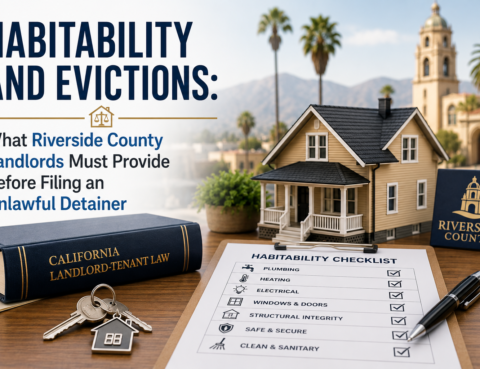
If you own rental property in Riverside, Moreno Valley, Corona, Temecula, or anywhere else in Riverside County, habitability is not just a maintenance issue — it can decide the outcome of your eviction case. When a landlord files an unlawful detainer for nonpayment of rent, one of the most common responses is a habitability defense: the tenant argues the unit was untenantable, and under Code of Civil Procedure § 1174.2 the court can reduce the rent owed and even deny possession. Before serving a 3-day notice, every Riverside County landlord should know exactly what California law requires them to provide. Here is the full statutory picture.
California landlords must provide and maintain rental dwelling units that are tenantable, sanitary, safe, weatherproof, supplied with essential utilities and facilities, and free from conditions that qualify the unit or premises as a substandard building. The core statutory habitability requirements are set out in California Civil Code § 1941.1, which deems a dwelling untenantable if it substantially lacks specified minimum characteristics or is a residential unit described in Health and Safety Code § 17920.3 or § 17920.10. Landlords must also install and maintain specified security devices under California Civil Code § 1941.3, smoke alarms under Health and Safety Code § 13113.7, and carbon monoxide devices where required under Health and Safety Code §§ 17926 and 17926.1. The Health and Safety Code further defines “substandard building” conditions, including inadequate sanitation, structural hazards, faulty weather protection, unsafe wiring, unsafe plumbing or mechanical equipment, nuisance conditions, infestation, visible mold, inadequate exits, and fire hazards. Health and Safety Code § 17920.3.
The Baseline: California Civil Code § 1941.1 Habitability Requirements
California Civil Code § 1941.1 supplies the baseline statutory definition of when a dwelling is deemed “untenantable” for purposes of the landlord’s duty under Civil Code § 1941. A dwelling is deemed untenantable if it substantially lacks any of the statute’s listed affirmative standard characteristics, or if it is a residential unit described in Health and Safety Code § 17920.3 or § 17920.10. Cal. Civ. Code § 1941.1(a).
Under Civil Code § 1941.1, the dwelling must have the following characteristics:
- Effective waterproofing and weather protection of the roof and exterior walls, including unbroken windows and doors.
- Plumbing and gas facilities that conformed to applicable law when installed and are maintained in good working order.
- An approved water supply under tenant control, or a landlord-controlled system, capable of producing hot and cold running water, furnished to appropriate fixtures, and connected to an approved sewage disposal system.
- Heating facilities that conformed to applicable law when installed and are maintained in good working order.
- Electrical lighting, wiring, and electrical equipment that conformed to applicable law when installed and are maintained in good working order.
- Clean and sanitary buildings, grounds, appurtenances, and landlord-controlled areas, free from accumulations of debris, filth, rubbish, garbage, rodents, and vermin.
- Adequate garbage and rubbish receptacles, in clean condition and good repair at the commencement of the tenancy, with the landlord thereafter providing appropriate serviceable receptacles and maintaining those under the landlord’s control.
- Floors, stairways, and railings maintained in good repair.
- A locking mail receptacle for each residential unit in a residential hotel, as required by Health and Safety Code § 17958.3.
- For leases entered into, amended, or extended on or after January 1, 2026, subject to statutory exceptions, a stove maintained in good working order and capable of safely generating heat for cooking.
- For leases entered into, amended, or extended on or after January 1, 2026, subject to statutory exceptions and tenant-election rules, a refrigerator maintained in good working order and capable of safely storing food.
Civil Code § 1941.1 also provides that a stove or refrigerator subject to recall by the manufacturer or a public entity is not capable of safely performing its statutory function. A landlord must repair or replace a recalled stove or refrigerator within 30 days after receiving notice of the recall, without limiting the tenant’s remedies under Civil Code § 1942. Cal. Civ. Code § 1941.1(c).
Security Devices: Dead Bolts, Window Locks, and Common-Area Exterior Doors
California Civil Code § 1941.3 imposes separate security-device requirements on landlords of buildings intended for human habitation. The landlord or landlord’s agent must install and maintain:
- An operable dead bolt lock on each main swinging entry door of a dwelling unit, installed according to manufacturer specifications and applicable state and local codes, including fire, life-safety, and disability-access requirements. The statute specifies minimum bolt-extension requirements and recognizes certain existing locks or approved alternative devices.
- Operable window security or locking devices for windows designed to be opened, subject to exclusions for louvered windows, casement windows, and windows located more than 12 feet vertically or six feet horizontally from the ground, a roof, or another platform.
- Locking mechanisms on exterior doors that provide ingress or egress to common areas with access to dwelling units in multifamily developments, where such doors exist, and in compliance with applicable fire and safety codes.
Cal. Civ. Code § 1941.3(a).
The tenant must notify the owner or authorized agent when the tenant becomes aware of an inoperable dead bolt lock or window security or locking device in the dwelling unit. The landlord is not liable for a violation of subdivision (a) unless the landlord fails to correct the violation within a reasonable time after actual notice or receipt of notice of the deficiency. Cal. Civ. Code § 1941.3(b).
Tenant remedies for a landlord’s violation include remedies under Civil Code §§ 1942, 1942.4, and 1942.5, an action for breach of contract, injunctive relief under Code of Civil Procedure § 526, and, in an unlawful detainer action following rent default, the ability to raise the violation as an affirmative defense and seek remedies under Code of Civil Procedure § 1174.2. Cal. Civ. Code § 1941.3(c).
Smoke Alarm Requirements for California Rentals
Health and Safety Code § 13113.7 requires approved and listed smoke alarms to be installed, in accordance with the manufacturer’s instructions, in each dwelling intended for human occupancy, except as otherwise provided in the statute. Cal. Health & Safety Code § 13113.7(a). The statute defines covered “dwelling units intended for human occupancy” to include one- or two-unit dwellings, lodging houses, apartment complexes, hotels, motels, condominiums, stock cooperatives, time-share projects, dwelling units of multiple-unit dwelling complexes, and factory-built housing, while excluding manufactured homes, mobilehomes, and commercial coaches as separately defined. Cal. Health & Safety Code § 13113.7(b).
For rental housing, the owner’s obligations include the following:
- At the creation of a new tenancy, the owner must ensure that required smoke alarms are operable.
- The tenant must notify the manager or owner if the tenant becomes aware of an inoperable smoke alarm within the unit.
- The owner or authorized agent must correct reported smoke-alarm deficiencies.
- The owner or agent may enter the unit to install, repair, test, and maintain required single-station smoke alarms, but except in emergencies must give reasonable written notice and enter only during normal business hours; 24 hours is presumed reasonable absent contrary evidence.
- Owners of rented or leased dwelling units were required, by January 1, 2016, to install additional smoke alarms as needed to comply with current building standards, subject to statutory qualifications for existing alarms and certain fire-alarm systems.
Cal. Health & Safety Code § 13113.7(d).
A violation of § 13113.7 is an infraction punishable by a maximum fine of $200 for each offense, and the statute does not affect other rights the parties may have under other law because of the presence or absence of a smoke alarm. Cal. Health & Safety Code § 13113.7(e)–(f).
Health and Safety Code §§ 17920–17928: Building Standards and Substandard Conditions
Health and Safety Code §§ 17920–17928 are part of California’s statutory framework for regulating buildings used for human habitation. They define key terms, authorize building standards and regulations, incorporate uniform industry codes and California Building Standards Code requirements, and identify specific safety requirements relevant to rental habitability.
What Counts as a “Substandard Building” in California?
Health and Safety Code § 17920 defines terms used in this part. Of particular importance, it defines a “substandard building” as a building, or portion of a building, including any building used for human habitation, that is declared substandard under Health and Safety Code § 17920.3. Cal. Health & Safety Code § 17920(n).
Health and Safety Code § 17920.3 then provides that any building or portion of a building, regardless of zoning designation or approved uses, including any dwelling unit, guestroom or suite of rooms, or the premises on which the same is located, is deemed a substandard building if listed conditions exist to an extent that endangers life, limb, health, property, safety, or welfare of occupants, nearby residents, or the public. Cal. Health & Safety Code § 17920.3.
The listed substandard conditions include, among others:
- Inadequate sanitation, including lack of or improper water closet, lavatory, bathtub or shower, kitchen sink, hot and cold running water, adequate heating, required ventilation, required natural light and ventilation, room and space dimensions, required electrical lighting, sewage connection, or adequate garbage and rubbish storage and removal facilities.
- Dampness of habitable rooms.
- Infestation of insects, vermin, or rodents, as determined by an authorized health or code enforcement officer.
- Visible mold growth, as determined by an authorized health or code enforcement officer, excluding minor mold on surfaces that can accumulate moisture as part of their proper and intended use.
- General dilapidation or improper maintenance.
- Structural hazards, including deteriorated or inadequate foundations, defective or deteriorated floors or supports, unsafe vertical or horizontal supports, and unsafe fireplaces or chimneys.
- Nuisance conditions.
- Unsafe or noncompliant wiring, plumbing, and mechanical equipment, subject to statutory exceptions for systems that conformed when installed and remain in good, safe, and working condition.
- Faulty weather protection, including deteriorated or ineffective waterproofing, broken windows or doors, and deteriorated exterior wall or roof coverings.
- Fire or explosion hazards, including unsafe equipment, combustible waste, or vegetation.
- Accumulations on premises of weeds, vegetation, junk, debris, garbage, rodent harborages, stagnant water, combustible materials, and similar hazards.
- Unsafe buildings due to inadequate maintenance.
- Inadequate exits, fire-resistive construction, or fire-extinguishing systems or equipment required by applicable law.
- Improper occupancy of buildings or portions of buildings for living, sleeping, cooking, or dining where not designed or intended for those occupancies.
- Inadequate structural resistance to horizontal forces.
Cal. Health & Safety Code § 17920.3(a)–(o).
Because Civil Code § 1941.1 expressly incorporates Health and Safety Code § 17920.3, a rental dwelling may be deemed untenantable not only when it substantially lacks the affirmative characteristics listed in Civil Code § 1941.1, but also when it is a residential unit described by the Health and Safety Code’s substandard-building provisions. Cal. Civ. Code § 1941.1(a).
Who Sets and Enforces California’s Building, Housing, Fire, and Safety Standards?
Health and Safety Code § 17921 authorizes the Department of Housing and Community Development to propose, adopt, amend, and repeal building standards and other rules and regulations for protection of public health, safety, and general welfare governing the erection, construction, enlargement, conversion, alteration, repair, moving, removal, demolition, occupancy, use, sanitation, ventilation, and maintenance of hotels, motels, lodging houses, apartment houses, dwellings, and accessory buildings and structures. Cal. Health & Safety Code § 17921(a).
The same section authorizes the State Fire Marshal to adopt, amend, and repeal building standards and other regulations for fire and panic safety in hotels, motels, lodging houses, apartment houses, dwellings, and accessory buildings and structures, with enforcement under the fire-safety enforcement statutes. Cal. Health & Safety Code § 17921(b).
Health and Safety Code § 17922 incorporates the California Building Standards Code and related rules and regulations, requiring standards that impose substantially the same requirements as specified international and uniform codes, including the Uniform Housing Code, International Building Code, International Residential Code, Uniform Plumbing Code, Uniform Mechanical Code, National Electrical Code, and International Existing Building Code. Cal. Health & Safety Code § 17922(a). For existing buildings, alteration and repair rules must permit replacement, retention, and extension of original materials and methods so long as the building complies with applicable standards and does not become or continue as a substandard building. Cal. Health & Safety Code § 17922(d).
Health and Safety Code § 17923 allows approved alternate materials, appliances, installations, devices, arrangements, or methods of construction if they are at least equivalent to prescribed requirements in performance, safety, and protection of life and health. The Department may require tests at the owner’s or agent’s expense to prove compliance or substantiate claims for alternates. Cal. Health & Safety Code § 17923.
Health and Safety Code § 17924 confirms that rules and regulations must be promulgated under the Administrative Procedure Act and that building standards must be proposed and submitted for adoption and publication under the California Building Standards Law. Cal. Health & Safety Code § 17924.
Carbon Monoxide Detector Requirements
Health and Safety Code § 17926 requires an owner of a dwelling unit intended for human occupancy to install an approved and listed carbon monoxide device in each existing dwelling unit that has a fossil-fuel-burning heater or appliance, fireplace, or attached garage. The devices must be installed within the applicable statutory deadlines, which have passed for the categories listed in the statute. Cal. Health & Safety Code § 17926(a). The number and placement of carbon monoxide devices must be consistent with building standards applicable to new construction for the relevant occupancy or with the manufacturer’s instructions, if technically feasible. Cal. Health & Safety Code § 17926(b).
For rental units, Health and Safety Code § 17926.1 requires the owner or owner’s agent who rents or leases a dwelling unit intended for human occupancy to maintain carbon monoxide devices in the unit consistent with §§ 17926 and 17926.1. Cal. Health & Safety Code § 17926.1(a). The device must be operable when the tenant takes possession. The tenant must notify the owner or agent if the tenant becomes aware of an inoperable or deficient device, and the owner or agent must correct reported deficiencies or inoperabilities. The owner is not in violation for a deficient or inoperable device when the owner has not received notice of the deficiency or inoperability. Cal. Health & Safety Code § 17926.1(c).
Garage Door Spring Safety Standards
Health and Safety Code § 17927 directs the Department to adopt standards and regulations for garage door springs installed in garages accessory to apartment houses, hotels, motels, and dwellings, as reasonably necessary to prevent death, injury, or property damage from broken springs. It also prohibits the sale, offering for sale, or installation of noncompliant garage door springs in such garages after the effective date of applicable standards or regulations. Cal. Health & Safety Code § 17927.
Sections 17925 and 17928: The Standards-Development Framework
Health and Safety Code § 17925 concerns objections to proposed building standards and related hearing procedures; it is part of the statutory framework for adoption and application of building standards but does not itself impose a separate day-to-day habitability duty on landlords comparable to Civil Code § 1941.1, Civil Code § 1941.3, Health and Safety Code § 13113.7, or Health and Safety Code §§ 17920.3, 17926, and 17926.1. Cal. Health & Safety Code § 17925.
Health and Safety Code § 17928 addresses green building standards. It requires the Department of Housing and Community Development, for building standards submitted to the California Building Standards Commission for adoption in the 2010 California Building Code or later, to review relevant green building guidelines as necessary and consider proposing as mandatory those green building features determined to be cost-effective and feasible to promote greener construction. It also requires periodic reporting to the Legislature. Cal. Health & Safety Code § 17928. Like § 17925, § 17928 is principally part of the standards-development framework rather than a direct landlord-maintenance provision, but it informs the building-standard regime applicable to dwellings.
Riverside County Landlord Habitability Checklist: What the Law Requires
Taken together, these statutes require California landlords to do at least the following for rental dwellings:
- Provide and maintain core habitability features: weatherproofing, functioning plumbing and gas facilities, hot and cold water, sewage connection, heating, electrical systems, sanitation, garbage receptacles, floors, stairways, railings, and any other statutorily required features. Cal. Civ. Code § 1941.1.
- Avoid substandard-building conditions: ensure the dwelling and premises do not contain dangerous inadequate sanitation, structural hazards, nuisance conditions, unsafe wiring, unsafe plumbing, unsafe mechanical equipment, faulty weather protection, fire hazards, infestation, visible mold, general dilapidation, inadequate exits, or other listed conditions endangering occupants or the public. Cal. Health & Safety Code § 17920.3.
- Install and maintain security devices: provide required dead bolts, window locks or security devices, and common-area exterior-door locking mechanisms in covered properties, subject to the statute’s exclusions and notice-and-cure rule. Cal. Civ. Code § 1941.3.
- Install, test, and maintain smoke alarms: provide approved smoke alarms, ensure operability at the start of a tenancy, and correct reported deficiencies. Cal. Health & Safety Code § 13113.7.
- Install and maintain carbon monoxide devices where required: provide approved devices in covered dwelling units with fossil-fuel-burning heaters or appliances, fireplaces, or attached garages, ensure operability at tenant possession, and correct reported deficiencies. Cal. Health & Safety Code §§ 17926, 17926.1.
- Comply with applicable building, housing, fire, life-safety, and maintenance standards, including the California Building Standards Code and other standards and regulations adopted under Health and Safety Code §§ 17921–17924 and related provisions. Cal. Health & Safety Code §§ 17921–17924.
Why This Matters in Your Riverside Eviction Case
California’s statutory habitability scheme requires landlords to provide rental units that meet affirmative minimum conditions under Civil Code § 1941.1, are not substandard under Health and Safety Code § 17920.3, and include specific safety and security features such as dead bolts, window locks, smoke alarms, and carbon monoxide devices where required. The Health and Safety Code provisions in §§ 17920–17928 operate alongside the Civil Code by defining substandard and unsafe conditions and establishing the building-standard framework that informs whether a dwelling is safe, sanitary, and fit for human habitation.
In practice, this means the strongest position a Riverside County landlord can take into an unlawful detainer is a documented record of compliance: repairs completed promptly after notice, working smoke and carbon monoxide alarms at move-in, and no outstanding code enforcement issues. A habitability defense that has no facts to stand on rarely slows an eviction down. One that does can cost you months of possession and thousands in reduced rent.
If you are preparing to evict a tenant in Riverside County and want to make sure a habitability defense will not derail your case, contact our office for a consultation before you serve notice.
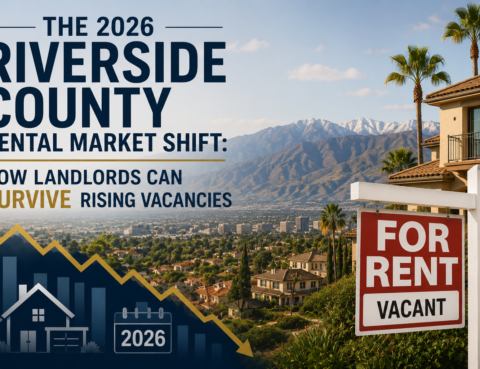
Riverside County’s rental market is facing a turning point that many landlords didn’t see coming. After an extended run of low vacancies and rising rents fueled by pandemic-era migration and remote work demand, a wave of new supply, softening rents, and growing vacancy rates are reshaping the rules of the game. Here’s what every Riverside County property owner needs to understand — and do — right now.
Key Numbers at a Glance:
- 6.1% Vacancy rate — the highest level in more than ten years
- 2,800+ New units entering the Riverside County market in 2026
- −1.1% Rent decline year-over-year in select inland submarkets
What Changed — And Why It Matters
For much of the early 2020s, Riverside County was one of the hottest rental markets in California. Renters priced out of Los Angeles and Orange County flooded the Inland Empire looking for more space and lower costs. Landlords benefited enormously — vacancy was nearly nonexistent, and rents climbed year after year with little resistance.
That tailwind has shifted. As remote work policies have tightened and many coastal employers have reinstated in-office requirements, some of the demand that flooded into the Inland Empire has pulled back. At the same time, developers who broke ground during the boom years are now delivering thousands of new apartment units across Riverside, Corona, Murrieta, Temecula, and the broader Coachella Valley. The result is a market where renters have more options than they’ve had in years, and landlords are working harder to keep units filled.
Rent growth has stalled — and in some pockets of the county, asking rents have declined outright. Properties that previously rented within days are now sitting for weeks, and concessions that were unheard of in Riverside just a few years ago — waived application fees, discounted first month’s rent — are becoming more common among larger competing properties.
The shift isn’t simply seasonal. Riverside County’s long-term fundamentals remain attractive: a growing population base, major logistics and distribution employment, expanding healthcare infrastructure, and a lower cost of living relative to coastal California. But the near-term supply overhang is real, and landlords who adapt their strategy now will be in the strongest position when the market firms back up.
The Eviction Dimension: Why the Stakes Are Higher Than Ever
During the peak rental years, a Riverside landlord dealing with a non-paying tenant could move through the eviction process knowing a replacement renter was likely just around the corner. In 2026’s market, that certainty is gone. Vacant units in many Inland Empire submarkets are sitting on the market significantly longer than they did two or three years ago, especially when competing against newly built properties offering modern finishes and move-in deals.
That reality doesn’t mean tolerating non-payment or lease violations. If anything, it raises the stakes. A mishandled eviction that drags on for months — through improper notices, procedural errors, or delays — is now far more expensive when you factor in the longer time it takes to secure a replacement tenant in a competitive market.
For Riverside County landlords in 2026, a thorough understanding of California’s eviction procedures, the proper notice requirements, and the unlawful detainer court process is a genuine financial advantage — not just a legal formality.
⚠ Know Your Rent Cap Obligations in Riverside County
California’s AB 1482 applies to most multi-family properties in Riverside County built before 2005, capping annual rent increases at 5% plus local CPI. For the current period, that typically means a cap in the range of 8% to 9% depending on the applicable index.
In a market where competing landlords are offering concessions to attract renters, pushing a renewal to the maximum allowable increase is a risky play. A reliable, long-term tenant who walks over a steep increase leaves you with a unit that may sit vacant for weeks or months in today’s environment. Price renewals strategically — factoring in the full cost of turnover, not just the potential upside of a higher monthly rate.
5 Strategies for Riverside County Landlords to Stay Competitive
1. Make Tenant Retention Your Top Priority
The economics of holding onto a good tenant have never been more favorable relative to the cost of replacing one. Turnover in 2026 means cleaning costs, listing fees, screening time, and — critically — potentially weeks of vacancy in a slower-moving market. Proactive communication before a lease expires, combined with a fair and reasonable renewal offer, goes a long way. Your best tenants are your most valuable asset right now.
2. Compete Smartly Against New Inventory
Riverside County has seen an influx of newer apartment complexes with resort-style amenities, modern kitchens, and in-unit laundry — and older units that don’t offer comparable features need to either upgrade or price accordingly. Targeted improvements that resonate with Inland Empire renters — updated appliances, covered parking, energy-efficient cooling systems (critical given Riverside’s summer heat), and outdoor living spaces — can meaningfully improve your leasing velocity and tenant quality without requiring a full renovation budget.
3. Strengthen Your Tenant Screening Standards
A softer market brings more applicants, but not necessarily better ones. Maintaining a consistent, thorough screening process — income verification at 2.5–3x monthly rent, full credit review, background check, and landlord references — is your best protection against a costly tenancy that ends in non-payment or property damage. One bad placement in today’s market, accounting for unpaid rent, legal fees, and re-leasing costs, can easily run $12,000 to $15,000 or more.
4. Understand Your Specific Submarket
Riverside County spans a large and diverse geography, and rental conditions vary considerably from one community to the next. Areas near major logistics hubs — Ontario, Moreno Valley, Perris — continue to draw stable working-class tenant demand tied to warehouse and distribution employment. Temecula and Murrieta attract families and professionals seeking suburban quality of life at lower price points than coastal SoCal. The Coachella Valley has its own seasonal dynamics driven by tourism and agriculture. Your pricing and marketing approach should reflect your property’s actual micro-market, not a countywide average.
5. Move Quickly and Correctly When Eviction Is Necessary
When a tenancy goes wrong, every week of delay adds to your losses. Improper notice, procedural missteps, or unfamiliarity with Riverside County Superior Court timelines can add months to a process that should take weeks. Knowing the correct notice type, the proper filing procedures, and what to expect at each stage of the unlawful detainer process — or working with someone who does — can be the difference between a contained financial setback and a prolonged, expensive ordeal.
The Long View: Riverside County’s Growth Story Isn’t Over
The current softness is real, but it shouldn’t obscure the bigger picture. Riverside County is one of the fastest-growing counties in California, with a population that continues to expand as households seek affordable alternatives to coastal markets. The logistics and e-commerce boom continues to drive employment across the Inland Empire, and major infrastructure investments — expanded transit, highway improvements, and healthcare facility growth — are laying the groundwork for sustained long-term demand.
The new supply being delivered today will be absorbed. As the construction pipeline slows in the coming years, vacancy will decline and rent growth will return. Landlords who manage their properties well through this period — retaining quality tenants, maintaining their units competitively, and handling legal challenges efficiently — will be well positioned for the recovery ahead.
Getting through a market shift takes more than patience. It requires tightening your operations, building genuine relationships with your tenants, making smart targeted improvements to your property, and having a firm grasp on your legal rights and obligations under California law.
Need Help with an Eviction in Riverside County?
Our team helps Riverside County landlords navigate the unlawful detainer process efficiently, professionally, and correctly — so you can get your property back and re-lease it with confidence.
Contact us today to discuss your situation.

If you’re a landlord in Riverside County, 2026 is bringing important changes that could directly impact how—and whether—you can evict a tenant.
Between new statewide housing laws and evolving local enforcement, the eviction process is becoming more complex. Missing even a small detail could delay your case or get it dismissed entirely.
What changed in Riverside County eviction laws in 2026?
In 2026, California eviction laws introduced stricter habitability requirements, expanded tenant protections, and increased procedural complexity. For Riverside County landlords, this means evictions can be delayed or dismissed if notices, property conditions, or legal steps are not handled correctly.
What’s Changing in 2026?
California continues to expand tenant protections, and while these laws apply statewide, their impact depends heavily on how they are enforced in local courts.
The biggest updates include:
- Stricter habitability requirements
- Expanded tenant defenses
- More technical eviction procedures
For landlords, this means greater risk if the eviction process isn’t handled correctly from the beginning.
1. New Habitability Requirements Could Block Evictions
One of the most important changes involves what qualifies as a legally “habitable” rental.
Landlords must ensure:
- Proper plumbing, heating, and electrical systems
- Safe and structurally sound conditions
- Functional essential features (including appliances in some cases)
Why this matters:
Tenants can now more easily raise habitability as a defense, which may:
- Delay eviction proceedings
- Reduce rent owed
- Prevent eviction altogether
👉 In Riverside County courts, these defenses are becoming more common.
2. More Tenant Protections = More Eviction Challenges
Tenants now have additional tools to fight eviction, including:
- Financial hardship claims
- Improper notice or service defenses
- Increased legal awareness and support
Even small procedural mistakes can lead to:
- Case dismissal
- Restarting the process
- Extended timelines
3. Local Court Process in Riverside County
Evictions in Riverside County are handled through the Riverside County Superior Court, and timelines can vary based on:
- Court backlog
- Whether the tenant contests the case
- Accuracy of your paperwork
👉 Riverside cases can move quickly if done correctly—but mistakes will slow everything down.
4. The 2026 Eviction Process in Riverside County (Step-by-Step)
To evict a tenant in Riverside County, landlords must follow the legal process precisely:
Step 1: Serve the Correct Notice
- 3-Day Notice to Pay Rent or Quit
- 30/60-Day Notice (depending on situation)
Step 2: File an Unlawful Detainer Lawsuit
Filed with Riverside County Superior Court.
Step 3: Tenant Response Period
Tenants typically have 5 business days to respond.
Step 4: Court Proceedings
If contested, the case proceeds to trial.
Step 5: Sheriff Lockout (If You Win)
Only the sheriff can legally remove the tenant.
5. What Riverside County Landlords Should Do Right Now
To avoid delays and legal issues in 2026:
✔ Confirm your property meets habitability standards
✔ Use updated and compliant legal notices
✔ Keep clear records of rent and tenant communication
✔ Act quickly when rent is unpaid
✔ Consult with an eviction professional before filing
6. FAQ: Riverside County Eviction Laws 2026
How long does an eviction take in Riverside County?
Typically 4–8 weeks if uncontested, but longer if the tenant fights the case.
Can tenants stop an eviction in California?
Yes. Tenants can delay or challenge evictions using defenses like habitability or improper notice.
What is a 3-day notice in Riverside County?
A legal notice requiring a tenant to pay rent or vacate before an eviction lawsuit is filed.
Do I need a lawyer to evict a tenant in Riverside County?
Not required, but professional help can prevent costly mistakes and delays.
Start Your Eviction Today in Riverside County
Avoid delays, lost rent, and legal errors. With increasing complexity in 2026 eviction laws, getting professional help early can make all the difference.
👉 Call 844-EZ-EVICT or request a consultation today to get your eviction filed quickly and correctly.
Final Thoughts
The 2026 changes are reshaping eviction law across California.
For Riverside County landlords, success comes down to:
accuracy, compliance, and speed.
Handled correctly, evictions can still move forward efficiently.
Handled incorrectly, they can become costly and time-consuming.
As a landlord attorney serving property owners throughout Riverside County, I need to alert you to a significant change in California eviction law. Assembly Bill 246—the Social Security Tenant Protection Act of 2025—was signed into law on October 6, 2025, and it creates new procedural hurdles for nonpayment evictions that property owners must understand.
Why California Passed This Law
The legislature has once again expanded tenant protections, this time focusing on renters who receive Social Security benefits. The stated rationale is that seniors and disabled individuals shouldn’t lose their housing when federal payment systems experience delays or disruptions. AB 246 joined several other tenant-focused bills signed in 2025, continuing the trend of additional restrictions on landlord remedies.
What AB 246 Does to Your Eviction Rights
This statute adds Section 1946.3 to California’s Civil Code, creating an affirmative defense that tenants can raise in unlawful detainer proceedings. Here’s what landlords need to know:
If a tenant claims their rent default resulted from a Social Security payment interruption caused by federal action or inaction, and they properly assert this defense in their Answer, the court must stay your eviction case. This means your case gets put on hold—you cannot proceed to trial or obtain possession while the stay is in effect.
Critically, the tenant must file this defense in their formal court response. Informal communications to you or your attorney don’t trigger the protection. The tenant bears the burden of providing adequate evidence linking the benefit interruption to their rent default.
The Financial Reality for Landlords
Make no mistake: this law does not forgive rent. Tenants still owe every dollar of back rent. However, once their Social Security payments resume, they get 14 days to either pay in full or convince you to accept a payment plan. If they do either, the court must dismiss or set aside your eviction action.
This creates a practical problem: your property sits in limbo during federal payment delays, you continue to accrue unpaid rent, and you have no certainty about when (or if) you’ll regain possession or receive payment. The law puts the risk of federal administrative failures squarely on property owners.
Compliance Timeline
Property owners should be aware that this law operates until January 20, 2029. California courts have until January 1, 2027, to update their forms and procedures, which means we’ll be dealing with evolving implementation over the next year.
How This Affects Your Operations
From a property management standpoint, AB 246 introduces several complications:
First, you’ll need to screen tenant responses more carefully to identify when this defense is being raised. Second, your timeline for regaining possession becomes unpredictable when Social Security interruptions occur. Third, you may face pressure to negotiate payment plans for rent that’s legitimately owed—plans that could extend for months depending on the arrears amount.
Landlord associations opposed this bill precisely because it adds complexity to an already cumbersome eviction process and creates uncertainty in rental housing operations. While tenant advocates celebrated the legislation, property owners must now navigate another layer of procedural requirements.
Protecting Your Interests
If you’re facing an eviction where the tenant raises an AB 246 defense, here’s what I recommend:
- Verify the defense is properly raised – Ensure the tenant filed it in their formal Answer with supporting documentation, not just mentioned it informally
- Scrutinize the evidence – The tenant must prove the Social Security interruption and its direct connection to the rent default. Inadequate proof should be challenged
- Document everything – Keep detailed records of all rent owed, payment history, and communications about the default
- Prepare for negotiation – If the tenant’s benefits resume and they request a payment plan, have clear terms ready that protect your financial interests
- Don’t accept verbal promises – Any payment arrangement should be in writing with specific dates, amounts, and consequences for default
Looking Ahead
As this law takes effect and cases begin appearing in Riverside County courts, we’ll learn more about how judges interpret and apply these provisions. Property owners should expect tenants’ attorneys to aggressively use this defense, particularly during any periods of federal budget uncertainty or Social Security administrative delays.
The fundamental challenge is that AB 246 makes landlords absorb the risk of federal payment system failures. When the government delays or interrupts benefits, it’s property owners who lose rent, face delayed possession, and must either accept payment plans or risk case dismissal.
If you’re pursuing an unlawful detainer action and encounter this defense—or if you’re planning eviction proceedings against a tenant who receives Social Security benefits—contact our office immediately. Proper handling of AB 246 defenses requires careful attention to procedural requirements and strategic decision-making to protect your property rights.
We’ll continue monitoring how California courts implement this statute and will update our clients as case law develops. In the meantime, update your unlawful detainer procedures to account for this new defense and be prepared for potential delays in nonpayment cases involving Social Security recipients.

Property managers and tenants in California face one of the nation’s most detailed regulatory frameworks for security deposits. Civil Code § 1950.5 establishes strict guidelines about deposit amounts, allowable deductions, and return procedures—with recent amendments introducing even more stringent requirements.
Recent changes that took effect between July 2024 and July 2025 have reshaped how California landlords must handle tenant deposits. Understanding these updates is essential for avoiding costly legal mistakes.
How California Law Classifies Security Deposits
The statute takes a broad approach to what qualifies as a security deposit. Any upfront payment collected at the start of a lease falls under these regulations, including:
- Standard security deposits
- Deposits labeled as “cleaning fees”
- Prepaid final month’s rent
- Pet-related deposits or fees
- Any other charge meant to cover potential future costs
The label you use doesn’t matter. California law looks at the payment’s purpose, not its name. Property owners who try to work around the rules by creative naming will still be bound by § 1950.5.
What Deductions Are Actually Allowed?
The law strictly limits what landlords can subtract from a returned deposit. Permissible deductions cover only:
- Unpaid rent that’s overdue
- Fixing damage beyond what normal living would cause
- Cleaning to bring the property back to its initial condition
- Property restoration when the rental agreement explicitly allows for it
What you cannot charge tenants for:
- Wear and tear from everyday use
- Problems that existed when they moved in
- Improvements or upgrades to the property
- Professional cleaning services unless absolutely required
Maximum Deposit Amounts in 2025
Primary Rule: Since July 2024, the general ceiling is one month’s rent for security deposits.
Limited Exception for Individual Owners: Two months’ rent is permissible only when all these conditions are met:
- The property owner is a natural person (or specific family trust/LLC arrangements)
- Total ownership doesn’t exceed two properties
- Combined unit count across all properties is four or fewer
Enhanced Protections for Military Members: The higher two-month limit cannot be applied to active service members. Further requirements include:
- Written justification for any deposit exceeding standard amounts
- Mandatory return of excess deposits after a six-month period (provided rent is current)
California law expressly forbids any lease language calling deposits “nonrefundable.” Every security deposit must be returnable, with only lawful deductions permitted.
The Pre-Departure Walkthrough Option
Before moving out, tenants can request an initial property inspection. This valuable right allows renters to fix problems before final deductions occur. Landlords who receive such requests must:
- Provide written notification of this option
- Conduct the walkthrough no sooner than two weeks before move-out
- Deliver a written list of potential deductions
Generally, if a landlord performs this inspection, they forfeit the right to deduct for unlisted items—unless the damage occurred afterward or was hidden by tenant belongings during the inspection.
2025’s New Photography Mandates
Recent legislation introduces photograph documentation requirements:
For leases beginning July 1, 2025 or later: Property owners must capture move-in photos, or they lose deduction rights entirely.
Starting April 1, 2025: Landlords must also document the unit with photos:
- Immediately after tenant departure (before any work begins)
- After all cleaning and repairs are complete
- These images must accompany any itemized deduction statement sent to the tenant
The Critical Three-Week Window
Property owners have exactly 21 calendar days after a tenant vacates to:
- Refund all deposit money not being withheld
- Supply a detailed breakdown of every deduction
- Attach receipts, invoices, contractor estimates, or thorough explanations
- Include photographic evidence supporting the charges
Missing this deadline or failing to provide proper documentation can result in:
- Loss of all rights to keep any portion of the deposit
- Liability for twice the deposit amount
- Potential liability for three times the deposit if bad faith is proven
Handling Unfinished Repairs
When work legitimately cannot be completed within three weeks, landlords have an alternative:
- Submit a reasonable cost estimate to the tenant
- Provide actual invoices and documentation within 14 days after work completion
Even when using estimates, landlords must ensure they’re accurate and backed by solid evidence.
Key Takeaways
California’s approach to security deposits strongly favors tenant protection and demands meticulous record-keeping. For property owners, careful adherence to every requirement is non-negotiable. For renters, knowing these rules can mean the difference between losing a deposit and recovering two or even three times its value.
If you’re facing a security deposit disagreement or want to ensure you’re meeting all legal obligations, early legal guidance from an eviction attorney in Riverside can save significant time, money, and stress.
As a Riverside landlord attorney specializing in evictions, I’m writing this to ensure you understand the full implications of Assembly Bill 628 before it takes effect on January 1, 2026. This isn’t just another compliance checkbox—it’s a fundamental shift in California’s habitability framework that will directly impact your eviction proceedings, maintenance obligations, and legal exposure.
The Core Requirement
AB 628 requires landlords to provide their tenants with a fridge and stove and repair or replace them if they stop working. More specifically, the law amends California Civil Code § 1941.1 to add two items to the list of what makes a dwelling “tenantable”:
- A working stove capable of safely generating heat for cooking purposes
- A working refrigerator capable of safely storing food (maintaining temperatures at 40°F or below)
When Does AB 628 Apply?
The trigger is critical: This will apply to leases entered into, amended or extended on or after January 1, 2026.
This means:
- Any new lease signed on or after January 1, 2026
- Any existing lease renewed or extended on or after January 1, 2026
- Any lease amendment executed on or after January 1, 2026
- Month-to-month tenancies where you formally renew or amend the agreement
Pre-2026 leases that continue on a month-to-month basis without formal renewal are not immediately subject to AB 628—but the moment you amend or renew that lease, compliance becomes mandatory.
The Eviction Connection: Why This Matters for Your Practice
Here’s where AB 628 becomes particularly dangerous for landlords: A malfunctioning refrigerator or stove could now trigger habitability disputes, repair-and-deduct claims, rent withholding, or serve as a defense against eviction.
In unlawful detainer proceedings, tenants can now assert habitability defenses based on appliance failures. When you file an eviction for nonpayment of rent, expect opposing counsel to:
- Assert rent withholding as justified due to uninhabitable conditions under § 1941.1
- File cross-complaints for breach of the implied warranty of habitability
- Request inspection orders to document appliance conditions
- Seek rent abatements retroactive to when the appliance failed
- Delay proceedings while habitability issues are litigated
The tenant can cite the broken, mandated appliance (the new habitability breach) as a justification for rent withholding, effectively challenging the legal premise of your unlawful detainer action.
The 30-Day Recall Rule
If the stove or fridge breaks or is recalled, the landlord will also be required to repair or replace the appliance within 30 days of notification.
This creates a hard deadline that plaintiffs’ attorneys will exploit. If you receive notice of a recall and fail to replace the appliance within 30 days, the unit becomes legally uninhabitable—providing tenants with immediate grounds for rent withholding and a powerful defense in any eviction proceeding.
Exemptions: Does Your Property Qualify?
Permanent supportive housing and single-room occupancy units where kitchens are shared with others are excluded from this law.
The exemptions are narrow and include:
- Permanent supportive housing
- Single-room occupancy (SRO) units
- Residential hotels
- Dwelling units within housing facilities offering shared or communal kitchens (including assisted living facilities)
If you believe your property qualifies for an exemption, document this determination carefully with legal counsel. Courts will not be sympathetic to landlords who self-assess exemptions incorrectly.
The Tenant Opt-Out for Refrigerators
Landlords cannot ask a tenant to buy their home’s stove, but there is limited flexibility with refrigerators.
Tenants may voluntarily agree to provide their own refrigerator, but only if:
- Both parties agree in writing when the lease is signed
- The lease includes specific opt-out language acknowledging the landlord’s legal obligation
- The tenant acknowledges responsibility for maintaining their own refrigerator
- The lease includes a clause allowing the tenant to provide 30 days’ written notice to end the opt-out and require the landlord to provide a refrigerator
This is not a loophole to avoid costs. You cannot condition tenancy on a tenant agreeing to bring their own refrigerator. Any attempt to do so violates AB 628 and exposes you to habitability claims.
Compliance Checklist for Riverside Landlords
To minimize your eviction litigation risk, take these steps immediately:
Before December 31, 2025:
- Audit every property to document current appliance status
- Identify which leases will renew or require amendment in 2026
- Budget for appliance purchases, delivery, and installation
- Select standardized appliance models to simplify future maintenance
- Update your lease templates to include AB 628 compliance language
- Create a tenant opt-out addendum for refrigerators that complies with the law
- Establish a system to monitor appliance recalls from the Consumer Product Safety Commission
Starting January 1, 2026:
- Ensure all new and renewed leases include working stoves and refrigerators
- Respond to appliance failure reports within your normal habitability response timeline (ideally within 24-48 hours)
- Document all appliance maintenance with photos, serial numbers, and work orders
- If you receive a recall notice, calendar the 30-day deadline immediately
- Maintain copies of purchase receipts, warranties, and installation documentation with each lease file
Cost Considerations
A basic stove and refrigerator can cost anywhere from $1,000 to $3,000 combined, depending on quality and features.
Beyond purchase costs, factor in:
- Delivery and installation fees
- Haul-away of old appliances
- Electrical or gas line upgrades for older properties
- Ongoing maintenance and repair reserves
- Eventual replacement costs (appliances typically last 10-15 years)
While you may be tempted to pass these costs to tenants through rent increases, remember that California’s statewide rent cap of 5% plus inflation (currently set by AB 1482, which expires mid-2026 but may be replaced with similar or stricter controls) applies throughout Riverside County for covered properties.
What “Good Working Order” Means
The law requires appliances to be in “good working order,” but what does that mean in practice? A refrigerator that can keep temperatures at 40°F or below can protect most food products.
For refrigerators:
- Must maintain safe food storage temperatures (40°F or below)
- Door seals must function properly
- Shelving and drawers should be intact and functional
- No excessive frost buildup or leaking
For stoves:
- All burners (or heating elements) must work
- Oven must heat to and maintain set temperatures
- Gas connections must be safe and leak-free
- Safety features (automatic shut-offs, etc.) must function
Don’t assume that because an appliance “technically works,” it meets the legal standard. A refrigerator that struggles to stay cold or a stove with only two working burners will likely fail the habitability test in court.
Documentation Is Your Best Defense
When defending against habitability claims in eviction proceedings, your documentation will make or break your case. For every unit:
- Photograph appliances at move-in with dates and serial numbers visible
- Keep a maintenance log of all service calls, repairs, and replacements
- Retain copies of recall checks and responses
- Document tenant-reported issues with timestamps and your response times
- Store warranty information and purchase receipts with the lease file
If a tenant claims you failed to maintain an appliance, you need contemporaneous records proving otherwise. “I always kept it working” won’t hold up in court without documentation.
The Bigger Picture: AB 628 in Context
AB 628 functions as one more onerous regulatory layer placed atop an already complex legal framework, particularly the stringent tenant protections provided by the Tenant Protection Act of 2019 (AB 1482).
AB 628 doesn’t exist in isolation. It compounds with:
- Statewide rent caps under AB 1482
- Just Cause eviction requirements
- Local rent control ordinances (particularly in coastal California cities)
- Increasingly tenant-friendly court interpretations of habitability
The cumulative effect is a narrowing window for profitable rental operations and increased litigation risk. From an eviction attorney’s perspective, every new habitability requirement gives tenants another potential defense, another reason to withhold rent, and another basis to delay eviction proceedings.
Practical Guidance for Eviction Prevention
The best eviction is the one you never have to file. Here’s how to minimize your AB 628-related litigation risk:
- Be proactive, not reactive. Don’t wait for tenants to complain about appliances. Schedule annual inspections and address issues before they become habitability violations.
- Respond immediately to appliance issues. When a tenant reports a broken refrigerator or stove, treat it with the same urgency you’d treat a broken heater or plumbing leak—because legally, it now has the same status.
- Consider loaner appliances. If a repair will take more than 24-48 hours, having a basic loaner refrigerator available can prevent a habitability claim while you source a replacement.
- Never retaliate. If a tenant withholds rent due to an appliance issue, do not file for eviction until you’ve verified compliance. Filing an eviction while the unit is legally uninhabitable will result in an embarrassing loss and potential sanctions.
- Update your lease templates now. Work with counsel to ensure your 2026 leases properly address AB 628, including appropriate language about maintenance responsibilities and opt-out procedures.
What About Rent Increases?
Many landlords are asking: Can I raise the rent to cover these new costs?
The short answer is: it depends on your local rent control status and AB 1482 limitations. Throughout Riverside County, you’re subject to the statewide rent cap (5% plus local inflation) for most properties built more than 15 years ago. The city of Riverside does not currently have additional local rent control measures beyond the statewide requirements. Adding appliances doesn’t create an exemption from rent control.
That said, when marketing units, you can position “included stove and refrigerator with landlord-provided maintenance” as a value-add that justifies competitive pricing—particularly compared to units where tenants must provide their own appliances.
Final Thoughts: Prepare Now or Pay Later
AB 628 takes effect in just days. Landlords who treat this as a minor compliance issue will find themselves facing expensive habitability claims and prolonged eviction litigation throughout 2026.
Those who prepare now—by auditing properties, updating leases, budgeting for appliances, and establishing robust maintenance protocols—will be positioned to avoid these problems entirely.
From a Riverside eviction attorney‘s perspective, I’d much rather help you draft compliant leases and maintenance procedures today than defend you against habitability claims and tenant counterclaims six months from now.
The time to act is now. Review your portfolio, consult with legal counsel, and ensure every property that will trigger AB 628 in 2026 is fully compliant before you sign or renew that next lease.
This article is provided for informational purposes and does not constitute legal advice. Riverside Landlords should consult with qualified legal counsel regarding their specific circumstances and compliance obligations under AB 628.

If you own rental property in Riverside, it’s essential to understand California’s rent increase laws to protect your investment and stay compliant. State legislation sets clear boundaries on how much you can raise rent, and knowing these rules helps you run your rental business smoothly while avoiding legal pitfalls.
California’s Statewide Rent Cap Explained
Through AB 1482, California limits annual rent increases for tenants. The maximum allowed increase is calculated as 5% plus the local inflation rate, or 10%—whichever is less. Your rent hikes within any 12-month period cannot exceed this threshold.
Since inflation varies, the permitted increase amount shifts annually. Here are the rent cap percentages from the past 4 years:
- August 1, 2021 through July 31, 2022: 9.1%
- August 1, 2022 through July 31, 2023: 10%
- August 1, 2023 through July 31, 2024: 10%
- August 1, 2024 through July 31, 2025: 9.3%
- August 1, 2025 through July 31, 2026: 7.5%
Remember that you can only raise rent twice within a 12-month timeframe, and the combined total cannot go beyond the annual cap. These limits don’t apply when you’re setting the initial rent for a brand-new tenant.
Riverside Properties Not Subject to Rent Control
Not every rental in Riverside falls under California’s rent cap regulations. The following property categories are exempt:
- New construction: Properties built in the past 15 years
- Affordable housing units: Properties with deed restrictions or affordable housing covenants
- Locally regulated rentals: Units already covered by more restrictive city rent control measures
- Individual ownership properties: Single-family homes and condos owned by individuals or LLCs (not corporate entities)
- Owner-occupied duplexes: Two-unit properties where the landlord lives in one unit
- Student housing: Dormitories and university-affiliated residences
While these exempt properties offer more leeway in setting rent amounts, you must still comply with California’s notification rules.
Proper Notice: A Legal Requirement
No matter your property’s exemption status, every rent increase in California demands appropriate advance notice. Inadequate notification is a common mistake that can invalidate your rent increase entirely.
Under California Civil Code Section 827, here’s what you need to provide:
- Under 10% increase: At least 30 days’ written notice
- 10% or more increase: At least 90 days’ written notice in most situations
Here’s a crucial point: the 10% calculation compares your new rent amount to what the tenant paid 12 months ago, not their current rate. This trips up many property owners.
Written notice must typically be hand-delivered, mailed, or posted and mailed if the tenant is unavailable. Electronic delivery is only permissible if you’ve previously agreed to this method in writing with your tenant.
Best Practices for Riverside Landlords
These strategies will help you stay compliant and maintain good tenant relations:
Keep Detailed Records: Track every rent increase with dates and amounts to avoid accidentally violating the two-per-year rule or annual ceiling.
Verify Your Calculations: Always check the current year’s legal limit and ensure your proposed increase complies before sending any notice.
Err on the Side of Caution: If your increase is close to 10%, opt for the 90-day notice period instead of 30 days to avoid disputes.
Document Everything: Save all rent increase notices and delivery proof. This documentation becomes invaluable if disputes arise.
Consider Your Strategy: Maxing out the legal increase isn’t always wise. Moderate adjustments can help retain quality tenants and minimize vacancy costs.
Resolving Tenant Disputes
Disputes can occur even when you’ve done everything correctly. Common issues include disagreements over notice timing, exemption status, or whether the increase exceeds legal limits.
If a tenant contests your rent increase or withholds the additional amount, proceed carefully. Evicting based on an invalid rent increase can result in case dismissal, damage to your reputation, and potential liability for the tenant’s attorney fees.
Conclusion
California’s rent regulations seek to balance landlord and tenant interests. For Riverside property owners, understanding these laws isn’t just about compliance—it’s essential for running a sustainable rental business. By tracking annual rent caps, following proper notification procedures, and maintaining thorough records, you can manage rent adjustments confidently while minimizing legal risk.
If you’re uncertain whether your planned rent increase complies with California law, or you’re facing a tenant dispute over rent, consulting with an experienced eviction attorney can help you navigate the situation and protect your business.
This content is for informational purposes only and does not constitute legal advice. Landlord-tenant law is complex and fact-specific. For advice regarding your particular circumstances, please consult a qualified eviction attorney in Riverside.

