
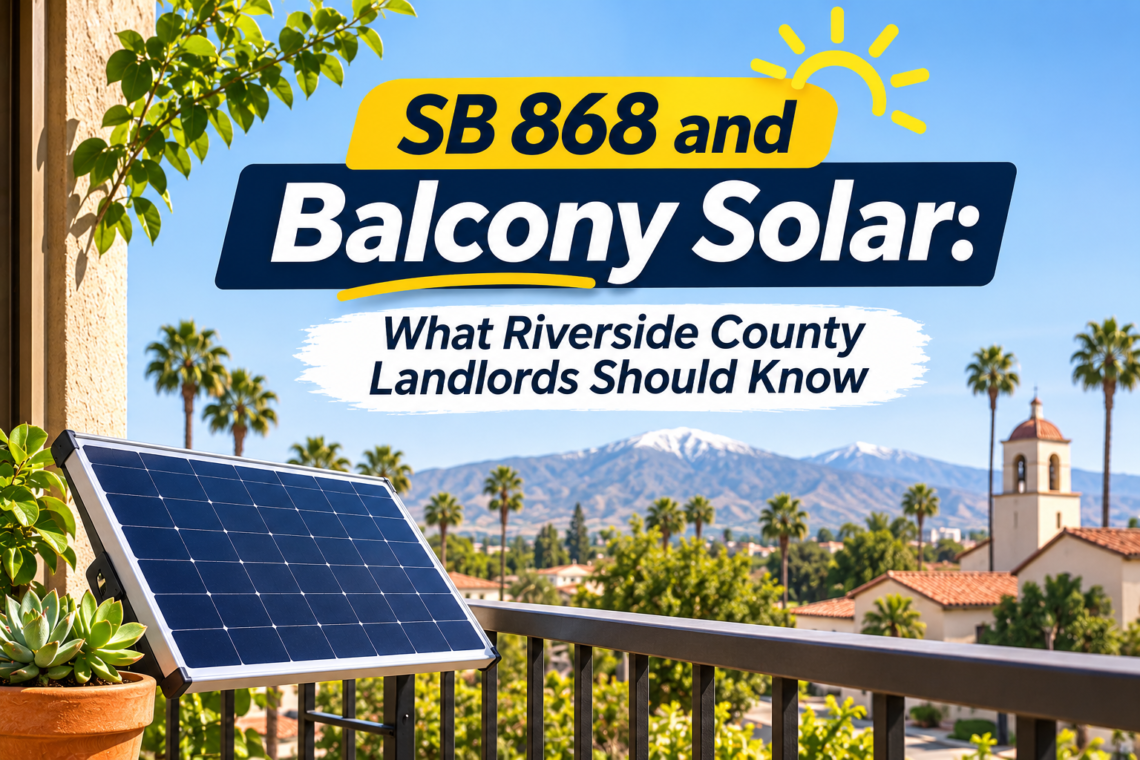
A New Solar Question Riverside Landlords May Soon Face
As California moves toward making certain plug-in solar systems more accessible to residential electricity customers, landlords throughout Riverside County may begin hearing a new question from tenants: Can I install a solar panel on my apartment balcony?
For renters, portable solar equipment may offer another way to generate electricity and potentially reduce household energy costs. For landlords, however, these installations raise practical questions involving electrical safety, exterior property modifications, insurance, and rental property policies.
The legislation behind this development is California Senate Bill 868 (SB 868), also known as the Plug and Play Solar Act. The legislation establishes a framework for certain portable solar generation systems that connect to a building’s existing electrical system.
Although the change is intended to make small-scale residential solar more accessible, it does not eliminate the practical questions property owners may face when tenants want to install equipment on balconies or other parts of a rental property.
For Riverside County landlords, understanding the distinction between utility regulations and rental property responsibilities can help prevent misunderstandings and reduce the potential for disputes.
What Does California SB 868 Mean for Plug-In Solar?
SB 868 addresses certain requirements involving portable solar generation devices and their connection to utility systems.
The legislation is intended to simplify the process of using qualifying plug-in solar equipment while establishing requirements intended to address safety and utility concerns.
Some of the broader issues addressed by the legislation include:
1. Simplified Utility Requirements for Qualifying Solar Equipment
The legislation creates a framework for certain portable solar generation devices to connect to a building’s existing electrical system without going through all of the traditional utility interconnection procedures associated with conventional solar installations.
This could make smaller solar systems more accessible to renters and homeowners who may not be able to install traditional rooftop panels.
2. Equipment Must Meet Applicable Safety Requirements
Qualifying equipment must meet the applicable certification and safety standards established under the law.
These requirements are intended to address concerns associated with supplying electricity to a building through its existing electrical circuits.
3. Utility Rules May Include Registration Requirements
Utility providers may establish procedures for identifying and registering qualifying equipment.
The requirements can vary depending on the utility serving the property. Riverside County landlords and tenants should confirm applicable procedures with the provider responsible for their particular address.
4. The Legislation Does Not Resolve Every Rental Property Issue
One important distinction for landlords is that utility approval and permission to modify or attach equipment to a rental property are not necessarily the same thing.
The legislation addresses qualifying solar equipment and utility requirements. Separate questions involving balconies, exterior attachments, property alterations, and rental agreements may still need to be considered.
Does SB 868 Automatically Give Tenants the Right to Install Balcony Solar Panels?
The distinction between utility requirements and rental property rules is important.
SB 868 establishes a framework for qualifying portable solar equipment and addresses certain utility interconnection requirements. It should not be treated as an automatic answer to every question involving the installation of equipment on a rental property’s balcony or exterior.
A device’s ability to connect to a building’s electrical system does not, by itself, resolve every issue involving the use or modification of the property.
For Riverside landlords, a proposed installation may involve several considerations:
- Rental agreement provisions concerning alterations and exterior attachments.
- Rules governing balconies, railings, windows, and other building features.
- Mounting equipment, drilling, or other physical modifications.
- Electrical and fire safety considerations.
- Restrictions involving common areas and shared building systems.
- Condominium association or homeowners association requirements, where applicable.
The practical approach is to consider the property, the rental agreement, and the applicable requirements together rather than relying on a general interpretation of the new legislation.
Why Balcony Solar Installations May Create Challenges for Riverside Rental Properties
Even a relatively small solar system can raise property management concerns. Before establishing a policy, landlords should consider how an installation might affect the building, neighboring residents, and the property’s existing rules.
Electrical Safety and Fire Concerns
Plug-in solar systems differ from ordinary household appliances because they supply electricity to a building’s existing electrical circuits.
Potential concerns may include overloaded circuits, electrical shock, fire risks, and possible interference with safety devices such as ground-fault circuit interrupter (GFCI) outlets.
These issues may deserve particular attention in older apartment buildings or properties with limited electrical capacity.
Landlords should consider the building’s electrical configuration, the equipment manufacturer’s instructions, and applicable safety requirements. A product’s certification does not necessarily mean that every installation is suitable for every property.
Balcony Attachments and Potential Property Damage
Many portable solar panels are designed to be mounted on balconies, railings, or other outdoor structures.
Depending on the equipment and installation method, property owners may want to consider:
- Potential damage to railings, exterior finishes, and balcony surfaces.
- Drilling or other physical alterations.
- Wind exposure and the stability of mounting hardware.
- Additional loads placed on balcony structures.
- Obstructions to walkways, exits, or access points.
- The possibility of equipment becoming dislodged and falling.
If a property owner permits an installation, clear expectations concerning mounting, maintenance, and removal can help avoid disagreements later.
Common Areas and Multi-Unit Buildings
In apartment communities, an installation may affect more than the individual tenant.
Panels attached to shared structures, cords routed through common areas, or equipment placed near walkways may create concerns involving accessibility, safety, and building operations.
Riverside landlords who manage multi-unit properties should consider whether proposed equipment could interfere with neighboring units, emergency access, shared electrical systems, or common areas.
Insurance and Potential Liability
Before adopting a policy concerning tenant-installed solar equipment, property owners should contact their insurance provider.
Insurance companies may have requirements or concerns involving electrical equipment, exterior attachments, fire exposure, property damage, or potential liability.
Landlords should also establish clear expectations regarding equipment maintenance, installation costs, damage, and removal. It is important not to assume that a tenant’s renters insurance automatically covers every potential loss associated with a solar installation.
Condominiums and HOA Requirements
Riverside County landlords who own rental condominiums or properties governed by homeowners associations should review the applicable association documents.
These rules may address balcony use, exterior modifications, visible equipment, and attachments to railings or other building components.
Property owners may need to consider both the rental agreement and the property’s governing documents when developing an approach to balcony solar.
How Should Riverside County Landlords Approach Tenant-Installed Solar?
There is no single property management approach that will necessarily work for every rental property. The appropriate policy may depend on the building, the rental agreement, insurance considerations, and applicable requirements.
Landlords may want to consider the following approaches when developing a written policy.
Option 1: Permit Solar Equipment Under Clearly Defined Conditions
Some property owners may decide that allowing qualifying portable solar equipment makes sense for their properties, particularly when tenants are interested in energy efficiency or reducing electricity costs.
If a landlord chooses to permit these systems, written guidelines could address:
- Approved equipment: Identify the types of equipment that may be considered, including applicable certification and safety requirements.
- Advance communication: Establish a process for tenants to provide the manufacturer, model, specifications, and proposed installation method.
- Installation methods: Address drilling, hardwiring, permanent attachments, and other physical modifications.
- Mounting and placement: Establish expectations concerning safe mounting, property protection, and unobstructed access.
- Utility requirements: Clarify how any applicable utility procedures will be handled.
- Maintenance and damage: Explain expectations concerning equipment maintenance and responsibility for property damage, subject to applicable law.
- Insurance considerations: Address any appropriate insurance requirements after reviewing the rental agreement, applicable law, and the insurer’s guidance.
- Move-out procedures: Establish expectations for equipment removal and restoration of affected areas.
- Safety concerns: Describe how documented safety or property concerns will be addressed.
Any written policy or lease addendum should be consistent with the rental agreement and applicable requirements.
Option 2: Establish Property-Specific Installation Guidelines
Some landlords may prefer to consider installations on a case-by-case basis or establish restrictions involving particular locations and installation methods.
For example, a property owner may have concerns about equipment attached to certain railings, installations near shared walkways, or equipment that could affect common areas.
Written guidelines can help explain the property’s expectations and provide a consistent process for responding to tenant requests.
Option 3: Develop a Policy That Addresses Equipment Restrictions
Other property owners may determine that portable solar equipment is not compatible with their building, insurance arrangements, or property management practices.
If a landlord wants to address or restrict tenant-installed equipment, the rental agreement and property rules should clearly explain the applicable expectations.
The appropriate wording and implementation process may depend on the property, the tenancy, and applicable law. Landlords should avoid assuming that a general lease provision or newly adopted house rule automatically resolves every situation.
What if an Existing Riverside County Tenant Wants to Install Solar Panels?
Landlords should consider the difference between establishing policies for new tenants and addressing requests from people who already live at the property.
For new rental agreements, property owners can address equipment and installation expectations before the tenancy begins.
Existing tenancies may involve different considerations. The ability to introduce new rental terms or restrictions can depend on the type of agreement, its existing provisions, applicable notice requirements, and relevant law.
For example, changes involving a month-to-month rental agreement may be treated differently from changes during a fixed-term lease.
Property owners should not assume that a newly created house rule automatically applies to every existing tenant. Before changing rental terms or issuing a notice, landlords should understand the requirements that apply to their particular circumstances.
What Should a Landlord Do if a Tenant Installs Solar Equipment Without Permission?
A tenant may install a balcony solar panel believing that the new legislation gives them permission to do so. A landlord may have separate concerns involving the installation method, property rules, or potential safety issues.
If a disagreement arises, a measured and well-documented response can help clarify the situation.
Start by Reviewing the Rental Agreement and Property Rules
The landlord should review the applicable rental agreement and any relevant property policies.
Consider the actual installation, how the equipment is attached, and whether the situation raises concerns involving property alterations, safety, or common areas.
Document the Situation
Maintaining accurate records can help establish what occurred and how the matter was addressed.
Useful documentation may include:
- Photographs showing the equipment and its placement.
- The date the installation was discovered.
- Relevant rental agreement provisions and property rules.
- Written communications with the tenant.
- Records of any documented property damage or safety concerns.
Clear records can be helpful if the disagreement continues.
Communicate With the Tenant
A tenant may not understand the distinction between utility regulations and property-specific installation requirements.
Explaining the property’s expectations and identifying the concern may help resolve the issue without unnecessary escalation.
Understand the Appropriate Next Steps
If the disagreement cannot be resolved, the landlord should consider the facts, the rental agreement, and the applicable requirements before deciding what to do next.
A dispute involving an unauthorized installation does not automatically mean that eviction is appropriate. Any formal action involving a tenancy must follow the applicable procedures and tenant protections.
Landlords should also avoid retaliation, improper self-help, or actions that interfere with a tenant’s rights. Removing a tenant’s belongings, disconnecting utilities, or attempting to force someone out without following the proper legal process can create additional problems.
Riverside County Landlord Checklist: Preparing for Plug-In Solar
Property owners do not need to wait until tenants begin asking about balcony solar to start reviewing their property policies.
The following checklist can help Riverside County landlords prepare:
- Establish a policy: Decide how your property will address qualifying portable solar systems and tenant installation requests.
- Review rental agreements: Look at existing language concerning alterations, balconies, exterior attachments, and electrical equipment.
- Consider property safety: Identify potential concerns involving electrical systems, mounting locations, and shared areas.
- Contact your insurer: Ask whether tenant-installed solar equipment could affect coverage or underwriting requirements.
- Check HOA documents: Review applicable association rules if the rental property is part of a condominium or planned community.
- Consider existing tenants: Understand the requirements that may apply before changing rental terms or introducing new restrictions.
- Inform property managers: Make sure anyone handling tenant communications understands the property’s policy.
- Keep policies current: Monitor legislative and regulatory developments that could affect landlord and tenant responsibilities.
Taking these steps can help property owners respond more consistently when questions about plug-in solar installations arise.
How Riverside Evictions Helps Landlords Navigate Rental Disputes
Changes in California rental laws and property management requirements can create uncertainty for landlords throughout Riverside County.
Whether you are dealing with a disagreement over rental agreement provisions, a property alteration, or another potential lease issue, understanding the applicable requirements before taking action is important.
Riverside Evictions helps landlords and property owners navigate rental disputes, lease compliance issues, eviction notices, and unlawful detainer matters.
If you are dealing with a tenant dispute or need assistance understanding the next steps in a rental property matter, contact our office to discuss your situation.
Frequently Asked Questions About SB 868 and Riverside County Rental Properties
Does SB 868 require Riverside County landlords to allow balcony solar panels?
SB 868 addresses utility requirements for qualifying portable solar generation devices. It should not be treated as an unrestricted tenant right to install equipment on a rental property’s balcony regardless of the property’s rules.
Landlords should consider the rental agreement, the proposed installation, and applicable requirements when addressing a tenant’s request.
What is California’s Plug and Play Solar Act?
California’s Plug and Play Solar Act, also known as SB 868, establishes a framework for certain portable solar generation devices that connect to a building’s existing electrical system. The legislation addresses utility requirements and conditions for qualifying equipment.
Which utility company handles plug-in solar in Riverside County?
The applicable electric utility depends on the property’s location. Some areas are served by Southern California Edison, while certain cities and communities have their own municipal or local electric utility providers.
Landlords and tenants should contact the utility serving the specific property to confirm its procedures and requirements.
Can a landlord charge a tenant a fee for installing balcony solar?
Utility-related provisions under SB 868 do not automatically resolve every question involving charges imposed by a landlord.
A new charge associated with an existing tenancy may raise separate questions under California rental laws and the terms of the rental agreement. Property owners should understand the applicable requirements before introducing additional charges.
Can a Riverside landlord take action if a tenant installs solar panels without permission?
The appropriate response depends on the rental agreement, the installation, the circumstances, and applicable tenant protections.
Landlords should document the situation, communicate with the tenant, and understand the applicable procedures before taking formal action. An unauthorized installation does not automatically establish grounds for eviction.
Should Riverside landlords review their rental agreements?
Reviewing rental agreements and property policies is a practical preparation step.
Landlords can identify areas that may need clarification, consider insurance and safety concerns, and establish a consistent process for responding to tenant requests.
Disclaimer: This article is provided for general informational purposes only and is not legal advice. It does not create an attorney-client relationship. California laws and local requirements may change, and the application of SB 868 to a particular rental property depends on the applicable statutory language and other relevant requirements. Consult a qualified attorney about your specific circumstances.


